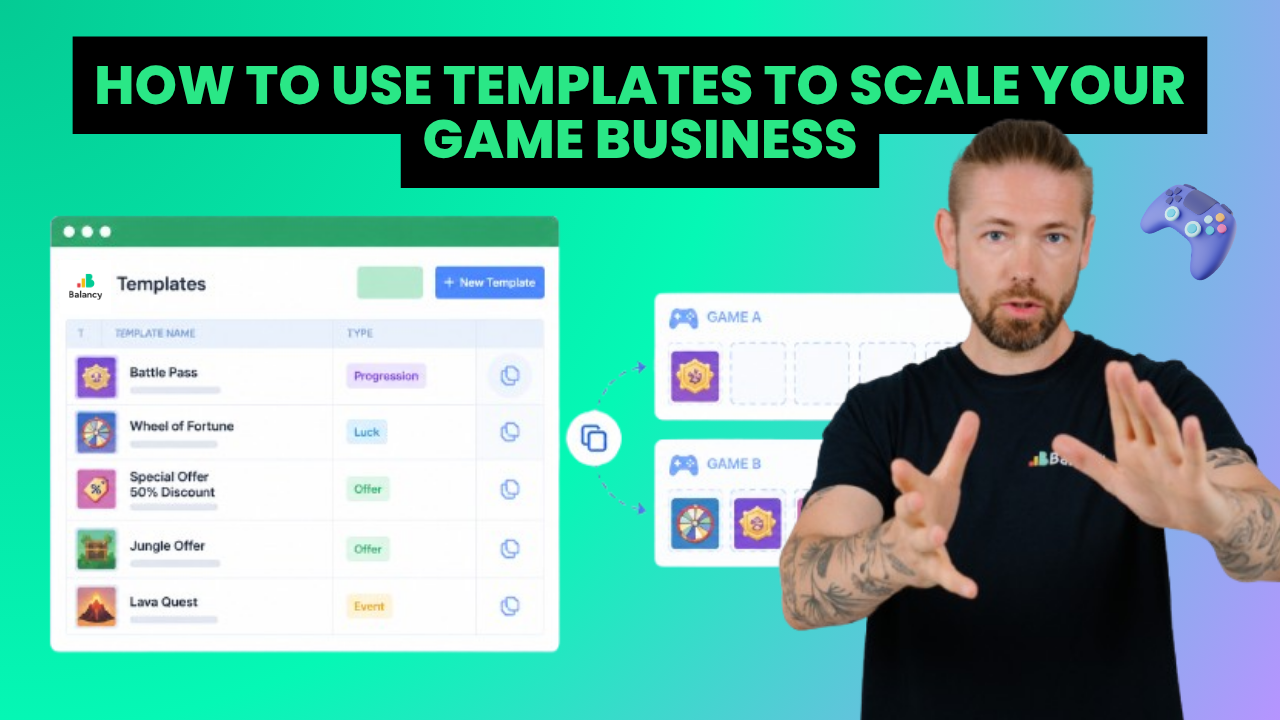
This article is based on Balancy webinar #17 with Michael Khripin (Product Owner) and Julia Iljuk (Head of Growth).
One of the most common inefficiencies in mobile game development is rebuilding the same LiveOps features from scratch every time a studio launches a new title or refreshes a seasonal campaign. The top studios in the industry have figured out a better way: templatization.
Templates (in the context of LiveOps) are reusable configurations that can be saved, reskinned, and deployed across one or multiple games. Think battle passes, special offers, wheels of fortune, tournaments, minigames. Any LiveOps mechanic can be turned into a template, and the studios that do this well are winning on speed, consistency, and revenue predictability.
Two directions for scaling with templates
There are two primary ways studios use templates to grow their business:
1. Scaling LiveOps within a single game
The classic example here is seasonal reskinning. Rather than designing a new event from scratch for each holiday or seasonal moment, a studio takes a proven mechanic (say, a Valentine’s Day special offer) and relaunches it for Easter by swapping in new artwork (rabbits, eggs) and tweaking rewards if needed. The underlying logic stays the same, only the surface changes.
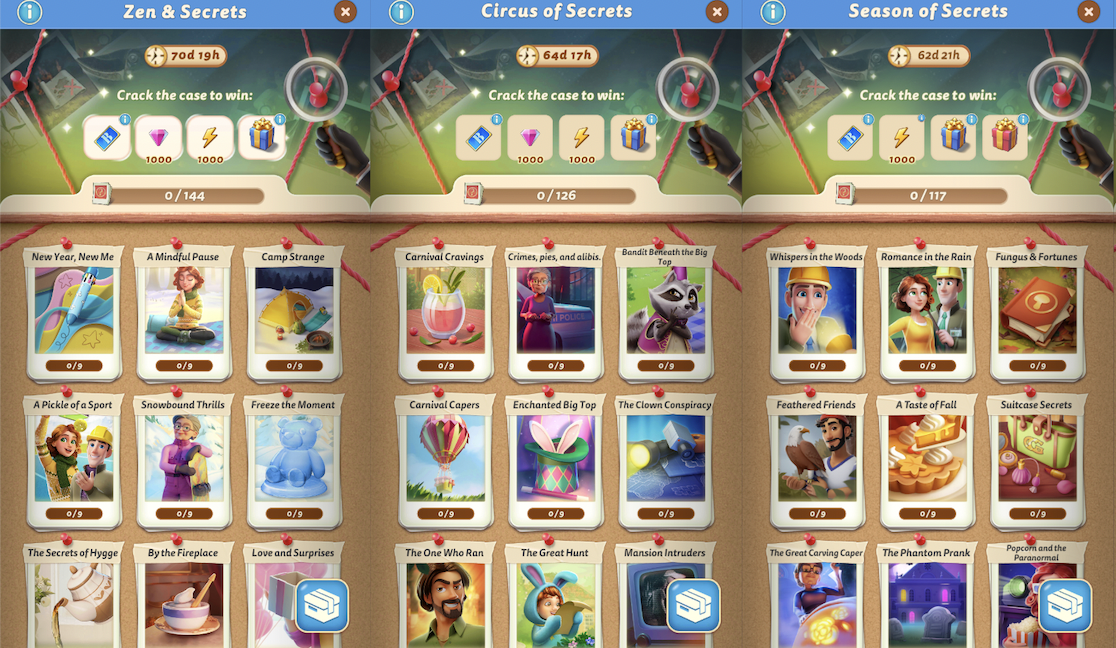
Merge Mansion by Metacore does this well with their collections mechanic. Each new collection uses the same UI framework but introduces fresh cards, images, and occasionally different rewards. Enough variety to feel new without the overhead of full development cycles.
2. Scaling templates across multiple games
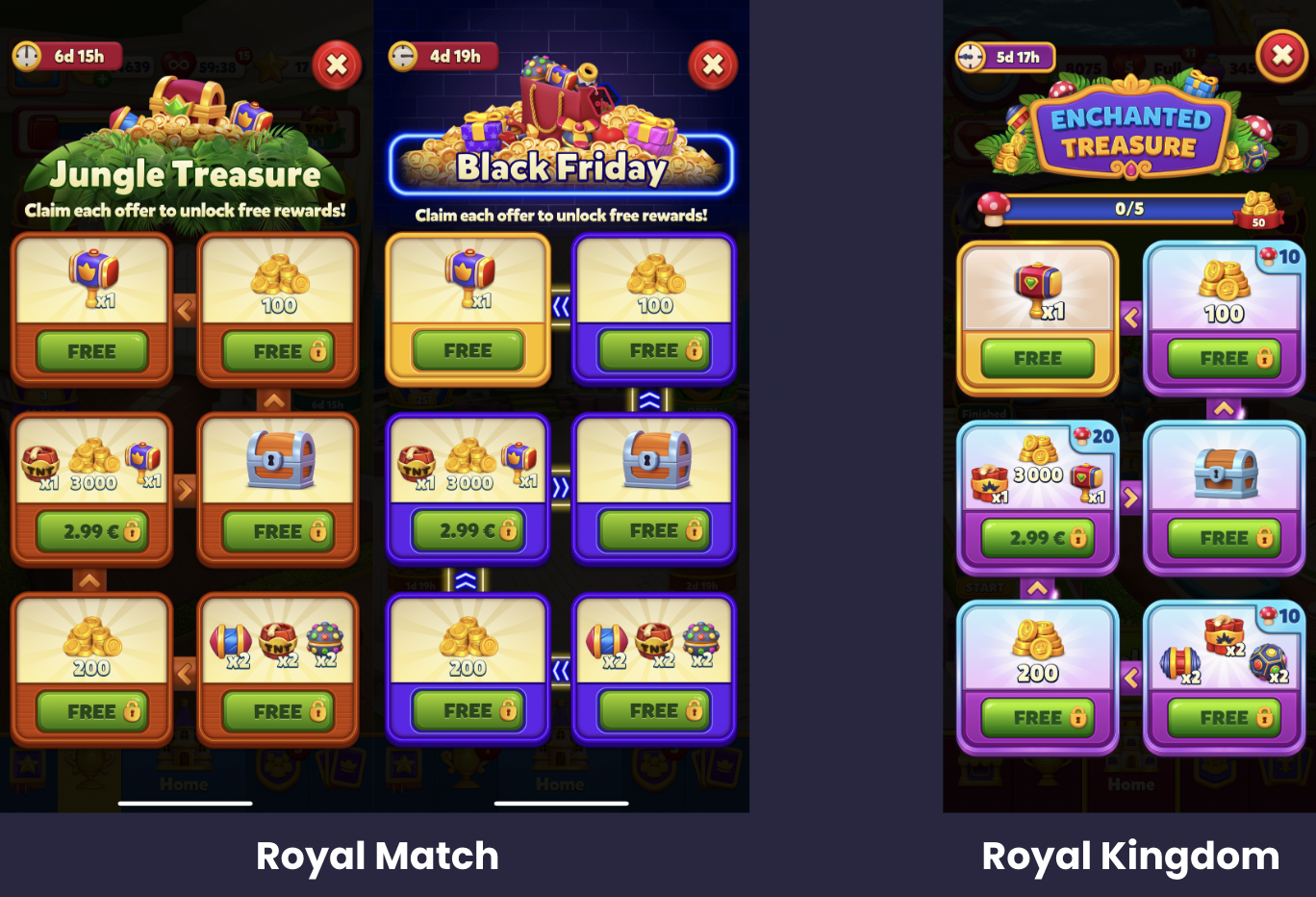
This one is often used by developers and publishers managing multiple titles. Dream Games’ Royal Match and Royal Kingdom are a textbook example. Both games share the same season pass balance (identical reward amounts, the same item types, even the same progression track structure). What differs is mainly the visual theme and one small game design tweak.
Royal Kingdom added a small mushroom-collection progression mechanic on top of the shared foundation, which serves as an experiment to see if enhanced progression drives better engagement. But crucially, they didn’t have to build the entire season pass from scratch – they copied the template and evolved from there.
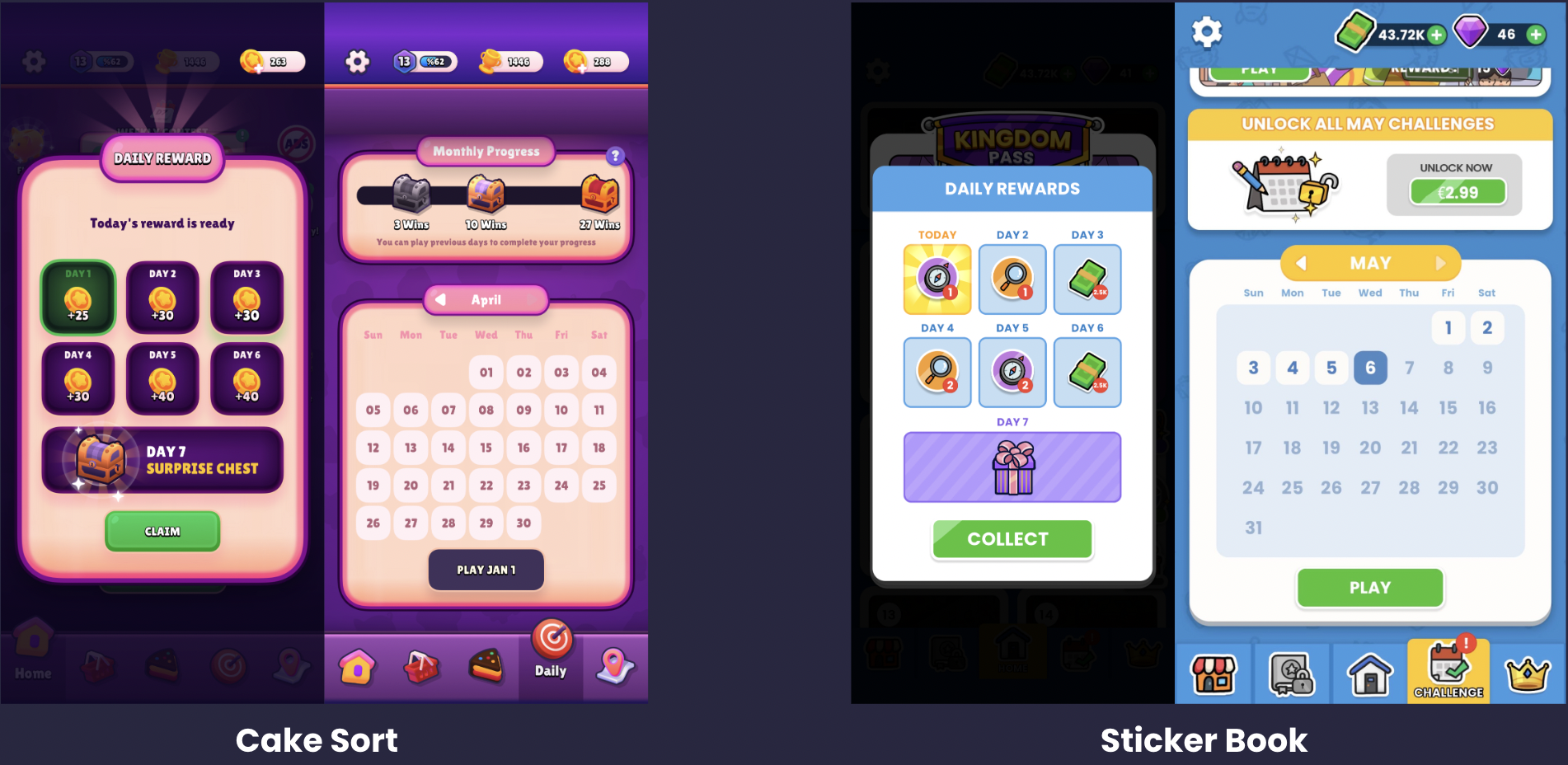
Here is one more example from Lion Studios on how they reuse daily tasks mechanic across their titles:
What this looks like in practice (inside Balancy)
Michael Khripin walked through a live demo showing exactly how templatization works inside the Balancy platform.
Swapping configs inside a game event
In Balancy, a recurring event like a season pass can reference different configurations for each iteration. You set up the event once, then each month (or each season), you point it at a different config – one with different reward tiers, different item counts, or different item types. The event logic itself never changes. This mirrors exactly how Merge Mansion manages its collections.
Cloning a config and updating a handful of reward entries takes minutes. You then assign the new config to the event in the dashboard, validate, and deploy – all without touching the game client.
Reskinning with the UI builder
Balancy includes a UI builder – “WordPress for LiveOps” – where you can design offer pop-ups, event windows, and shop layouts without engineering work.
Changing a background color, swapping a frame asset, or updating a button color are all handled visually. Once you save and deploy the new look, every future occurrence of that recurring event will automatically use it.
Cross-project packages: copying features between games
The most ambitious feature on display was cross-project packages. A studio can take any template – a season pass design, a special offer layout, an event pop-up – and publish it as a package in Balancy’s library. That package can then be installed into an entirely separate game project with a single click.
Once installed, the package brings placeholder art and the full structural configuration. The team’s only remaining job is to swap placeholders with their game’s actual assets. The logic and layout arrive ready-made.
According to Michael, big publishers have built entire infrastructure libraries this way – standardized packages covering in-game shops, special offers, and daily tasks that get installed as a bundle whenever a new title launches. The result: new games can go live with a full LiveOps setup in hours rather than months.
Bonus: a ready-made LiveOps calendar for your game
To put everything covered in this webinar into immediate practice, Balancy is offering a Royal Match-inspired LiveOps calendar that you can copy directly into your own game. The template is fully adaptable: swap out the events, adjust the cadence, or reskin it to match your game’s visual identity.
Watch the video below to see exactly what’s included and how to integrate it in under five minutes.
Key takeaways
Templates are an essential strategy for developers and publishers running multiple games. Studios that invest in building reusable LiveOps components:
- Ship faster. New games don’t wait months for LiveOps infrastructure.
- Reduce risk. Proven mechanics get reused rather than rebuilt imperfectly.
- Iterate smarter. Incremental improvements (like Royal Kingdom’s mushroom mechanic) compound over a solid foundation rather than getting lost in full rebuilds.
- Free up engineering. When game designers can configure, reskin, and deploy without developer support, engineers focus on what only they can do.
The studios scaling efficiently in 2026 aren’t working harder – they’re templatizing better. Talk to our team to see how templatization can work in your game!