We asked Michael Khripin, Product Owner at Balancy, to take a closer look at the shop design in Pixel Flow by Loom Games.
At first glance, this is a fairly typical hybrid-casual puzzle game shop: coin packs, bundles, and a No Ads offer. But underneath that familiar structure is a less common idea — the shop expands progressively as the player advances.
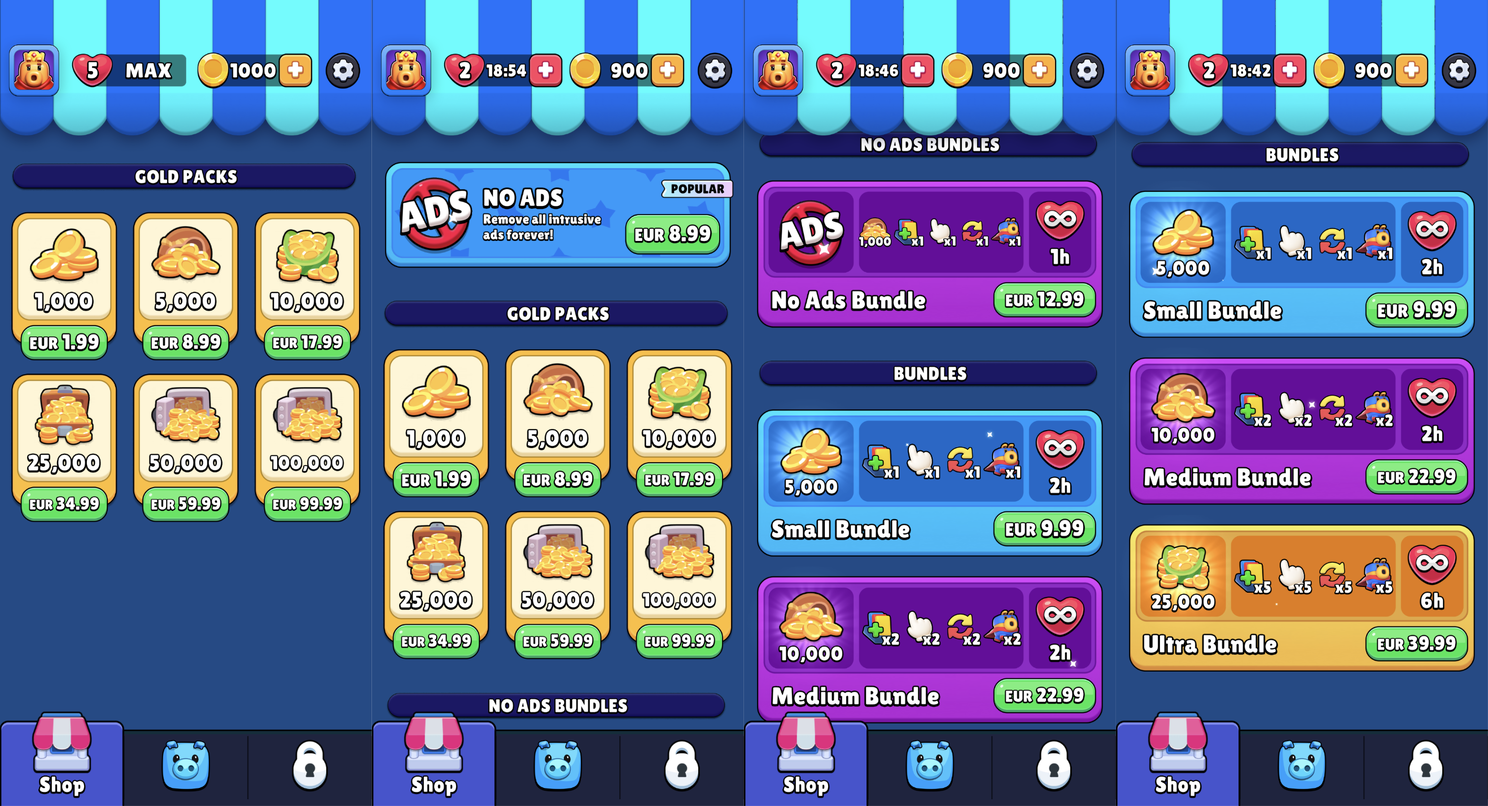
Early on, players only see what’s relevant to them. Coins come first. Bundles appear after boosters are introduced. No Ads shows up once forced ads begin. A Season Pass slot is added later.
That makes Pixel Flow an interesting case. The shop isn’t static — it grows with onboarding.
Let’s break down what works well, where the system loses efficiency, and what LiveOps teams can learn from it.
A Shop That Grows With the Player
The shop is built as a single vertical feed with section dividers — a strong fit for a hybrid-casual title with a relatively limited assortment.
Rather than showing the full catalog from day one, Pixel Flow reveals new sections gradually:
-
Coins first → when that’s all the player understands
-
Bundles later → once boosters become meaningful
-
No Ads → when ad friction becomes relevant
-
Season Pass → once that system is live
This is a smart onboarding choice.
💡 A note from Michael:
“Showing players only what they can understand right now is often better than showing everything at once. It reduces noise and keeps the shop aligned with progression.”
This progressive assortment expansion is relatively rare — and potentially powerful. It helps the shop feel more relevant at each stage of the journey.
The one risk: if the game doesn’t clearly notify players when something new appears, they may never realize the shop has expanded.
What’s Missing From the Shop Loop
Despite the smart structure, a few pieces are absent:
-
no free daily gift
-
no rotating daily/flash deals
-
no dedicated starter pack in the classic format
That matters because without a free reward loop, players have less reason to visit the shop every day.
A daily gift often does more than just hand out currency — it builds the habit of opening the shop, which then increases exposure to paid offers.
Gold Packs: Clean Logic, One Dead Zone
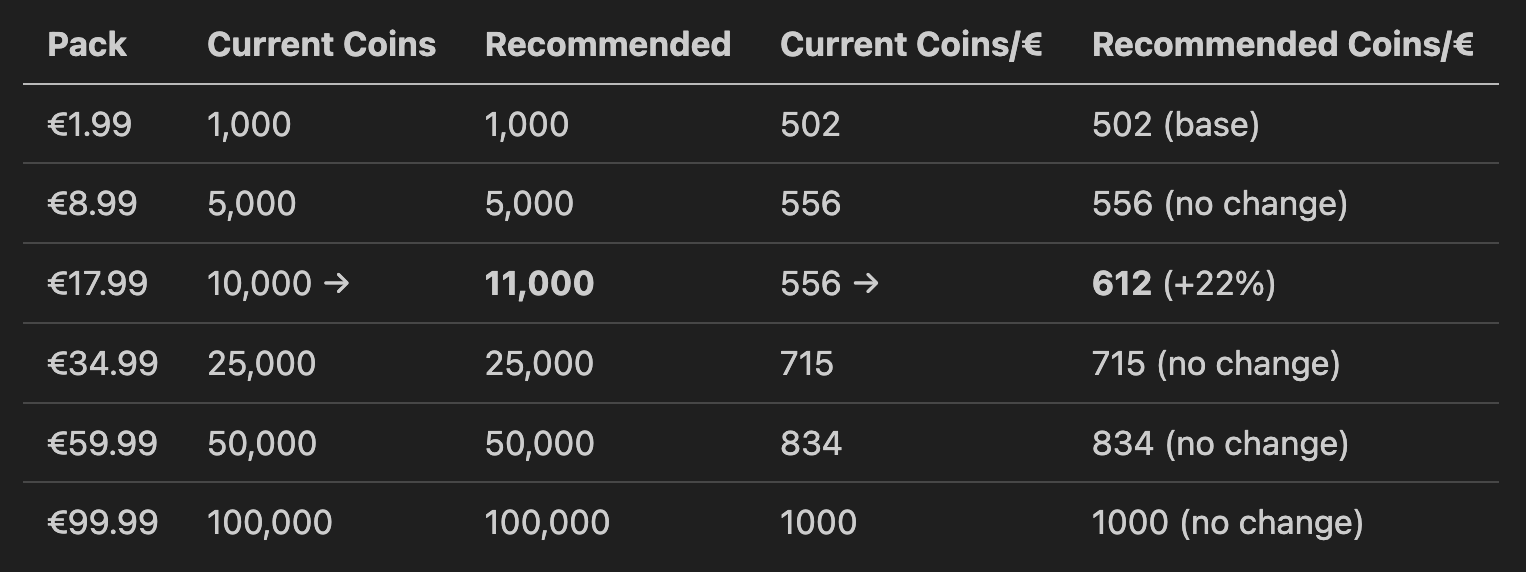
The good news: the Gold Pack ladder is monotonic.
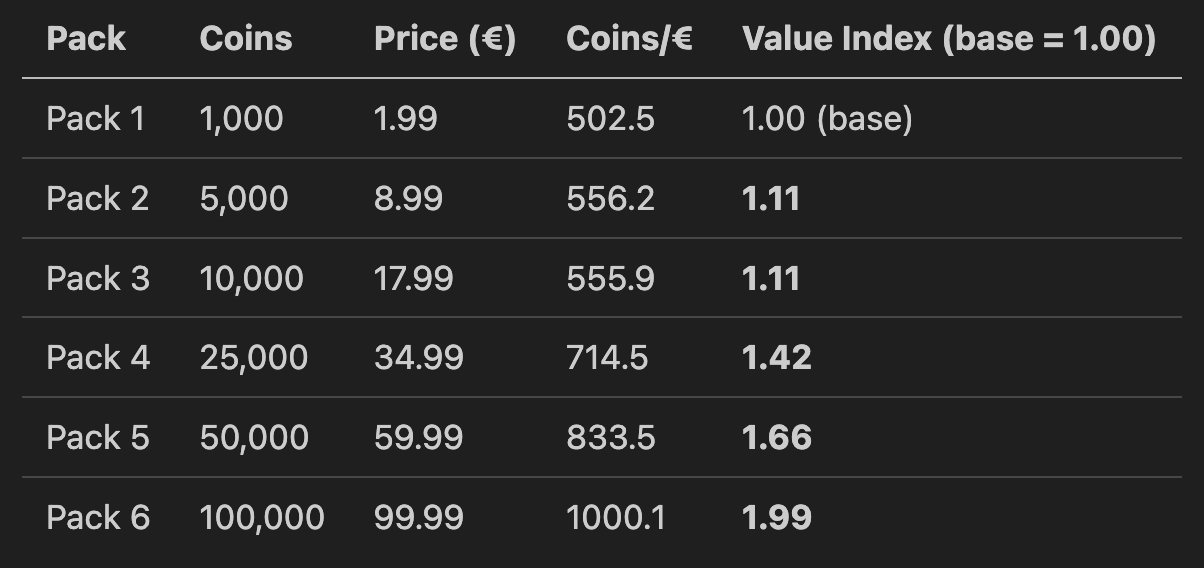
Each pack delivers more value than the one before it, so there’s no obvious arbitrage where buying smaller packs repeatedly beats a larger one. That’s basic pricing hygiene — and plenty of games still get it wrong.
However, one part of the ladder feels flat.
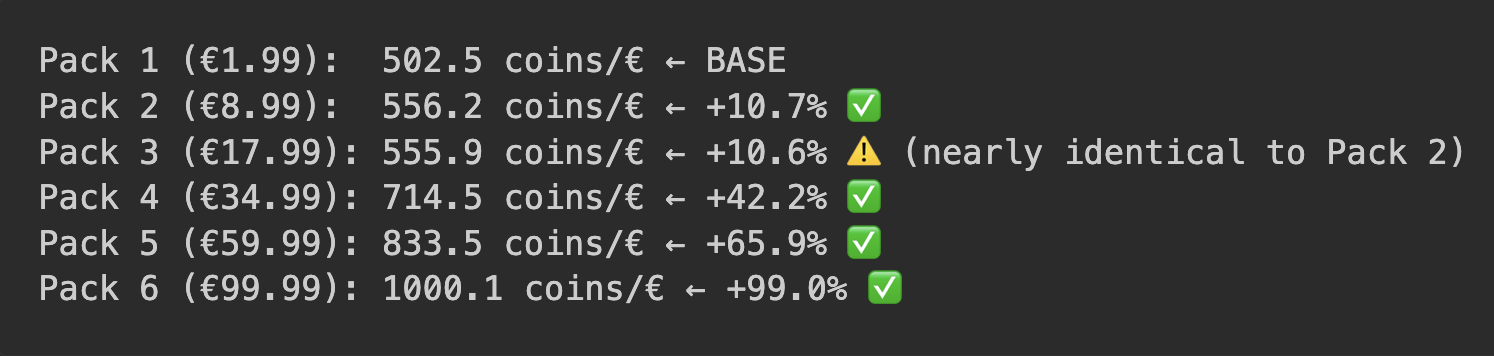
Where the progression weakens
Pack 2 and Pack 3 are so close in value that stepping up barely feels more rewarding.
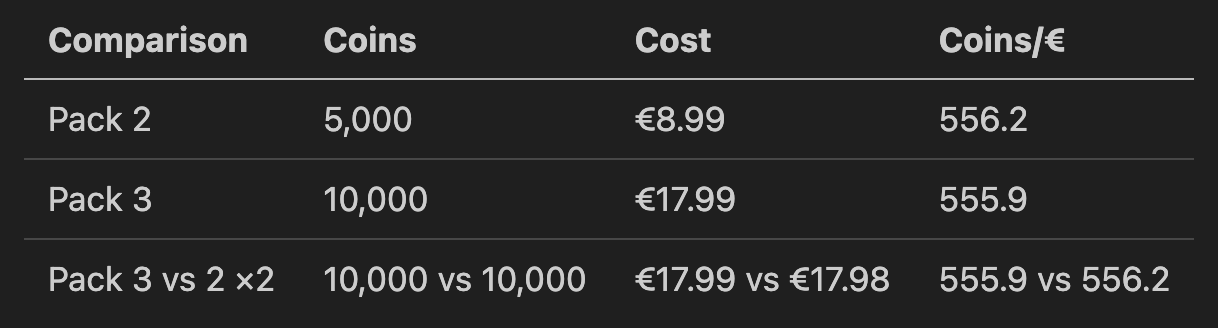
From the player’s perspective, that creates a dead zone:
-
the price increases meaningfully
-
the value does not
💡 A note from Michael:
“A value ladder works when every upgrade feels visible. If the next pack doesn’t feel better, the ladder stops doing its job.”
The upper tiers, by contrast, are much stronger. The top packs deliver a much clearer bonus and create a more convincing aspirational spend target.
Bundles: Good Tiering, One Misaligned Step
The bundle system has some solid foundations.
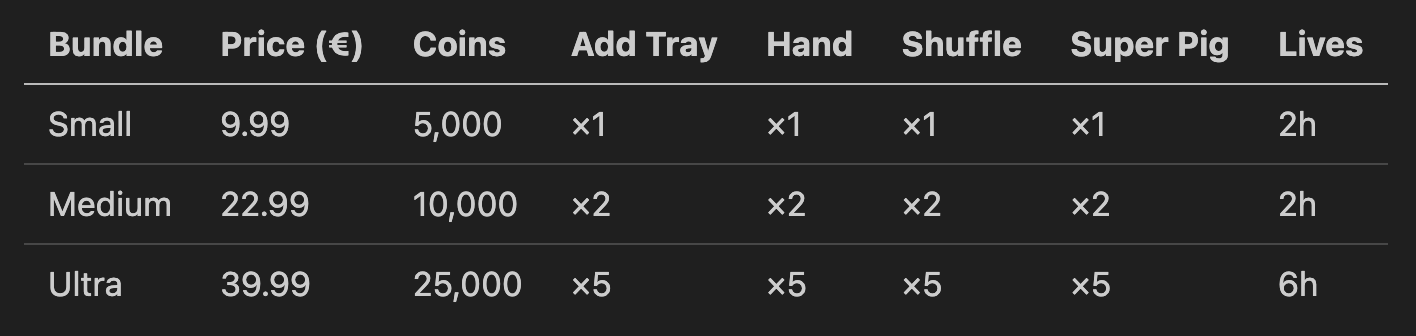
What works:
-
clear visual tiering
-
stronger color treatment for higher tiers
-
content scales up as prices rise
But one mid-tier bundle creates friction.
The main issue
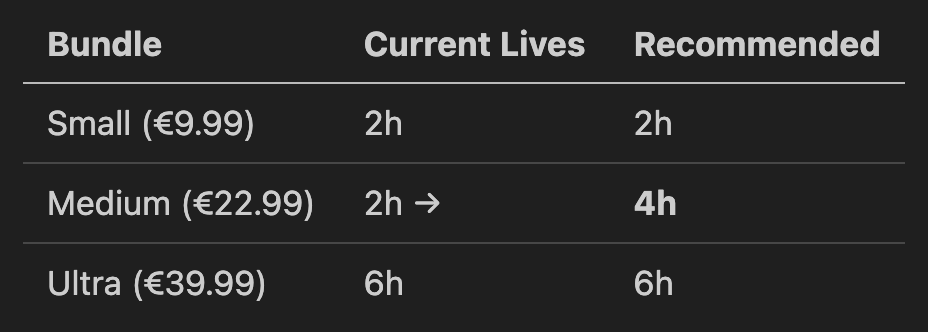
The Medium Bundle does not feel meaningfully better than the Small Bundle in one important way: both offer the same unlimited lives duration.

That weakens the step-up logic.
If the player is paying much more, they expect every major component of the bundle to scale accordingly. When one key component stays flat, the bundle can feel less generous than intended.
There is also an efficiency issue in how the bundle value is distributed: the mid-tier bundle ends up being the least favorable point for booster value.

That doesn’t break the system — but it does make the progression less intuitive.
No Ads: A Smart Conversion Moment
One of the strongest ideas in Pixel Flow is how it handles the No Ads offer.
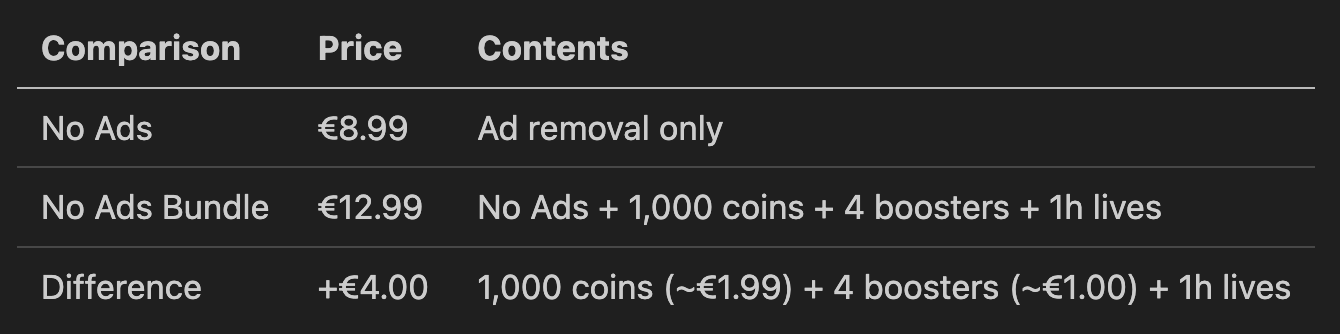
Instead of pushing a starter bundle with artificial urgency right away, the game introduces No Ads at the moment ad friction becomes real.
That timing matters.
The player isn’t responding to a timer. They’re responding to a real problem: “ads are interrupting my experience, and here’s the offer that solves it.”
That creates a much more organic conversion trigger.
Two-tier structure works well
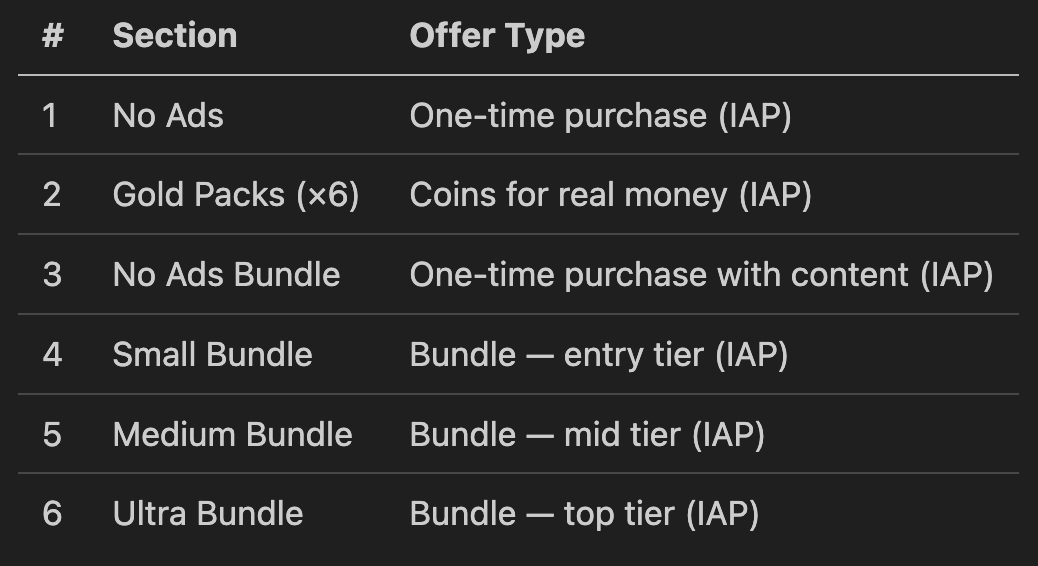
The shop offers:
-
a base No Ads purchase
-
a No Ads Bundle with added content
This is smart segmentation:
-
price-sensitive players can take the simpler option
-
higher-intent players can choose the richer bundle
💡 A note from Michael:
“This is a good example of monetization meeting the player at the right moment. The trigger is real friction, not artificial pressure.”
The only thing missing is a stronger exclusivity signal. The No Ads Bundle functions a lot like a starter offer, but without a “One Time Only” label, it loses some urgency.
UX and Visual Design
From a UI perspective, the shop makes several good choices.
What works well
-
single vertical layout keeps navigation simple
-
bundle tiers are visually differentiated
-
coin packs use a familiar 3×2 grid
-
larger value packs feel more substantial visually
This keeps the experience readable and proportionate.
What could improve
The coin packs don’t show value badges such as:
-
Best Value
-
Popular
-
+99% Bonus
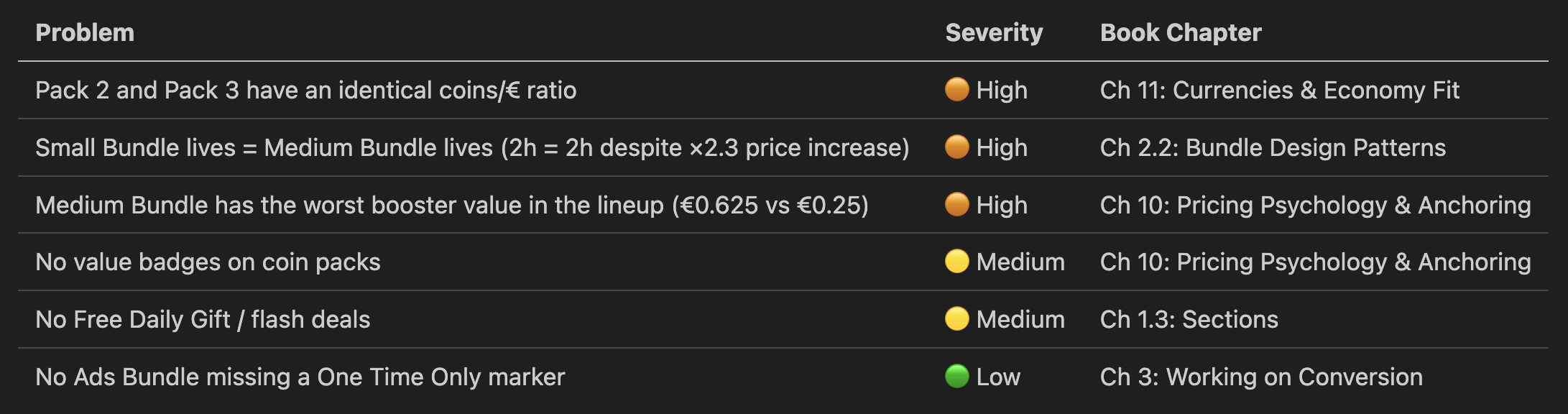
That makes it harder for players to read the pack ladder quickly.
In most shops, these labels do more than decorate — they guide attention and help players understand why moving up the ladder is worthwhile.
The Most Interesting Pattern Here
The most distinctive part of Pixel Flow’s shop is not its pricing or bundle design.
It’s the progressive shop expansion.
Rather than opening the full monetization system immediately, the game waits until each offer type is relevant:
-
bundles appear after boosters matter
-
No Ads appears after forced ads matter
-
future monetization layers unlock later
This is effectively onboarding logic applied to the shop.
That’s worth paying attention to.
Because for many games, the shop problem isn’t just “what should we sell?”
It’s also “when should players see it?”
Final Thoughts
Pixel Flow gets a lot right.
The shop structure is simple, the pricing ladder is mostly clean, the No Ads setup is well timed, and the progressive assortment logic is more thoughtful than what many hybrid-casual games attempt.
At the same time, a few calibration issues reduce the monetization potential:
-
Pack 2 and Pack 3 don’t create a strong step-up incentive
-
the Medium Bundle feels less rewarding than it should
-
the No Ads Bundle could use stronger exclusivity framing
-
value progression in coin packs is not clearly signposted visually
These are not architectural problems. They are configuration-level refinements — the kind of improvements that can have a meaningful effect without rebuilding the shop from scratch.
LiveOps Takeaway
What makes this shop interesting is not just what it sells — but when it sells it.
Pixel Flow shows how shop assortment can evolve with onboarding, introducing monetization surfaces only when the player is ready to understand them.
That’s a valuable LiveOps lesson.
💡 A note from Michael:
“A good shop doesn’t just optimize prices. It introduces the right offer at the right stage of the player journey.”
Platforms like Balancy help teams work this way more intentionally by making it easier to:
-
launch offers in sync with progression
-
test different bundle structures and price ladders
-
adjust shop surfaces as features unlock
-
iterate on monetization timing without long development cycles
For live games, that flexibility matters. Because often, the difference between a decent shop and a high-performing one is not a new feature — it’s better sequencing, better calibration, and faster iteration.