We asked Michael Khripin, Product Owner at Balancy, to take a closer look at the shop design in Link Legends by Obscure Games.
The game is a hybrid-casual puzzle title with a relatively compact monetization setup:
-
coin packs
-
a rotating Daily Deals carousel
-
a progression-gated free reward (Lucky Pack)
There are no interstitials, no banners, no battle pass, and no subscriptions. Monetization relies primarily on IAP bundles and currency, supported by a lightweight rewarded ad loop.
This makes Link Legends an interesting case: a clean, focused shop system with minimal surface area — where every design decision has a visible impact.
Shop Structure: Simple, Focused, Effective
The shop uses a single vertical feed with three sections:
-
Daily Deals (top)
-
Coin Packs (middle)
-
Lucky Pack (bottom)
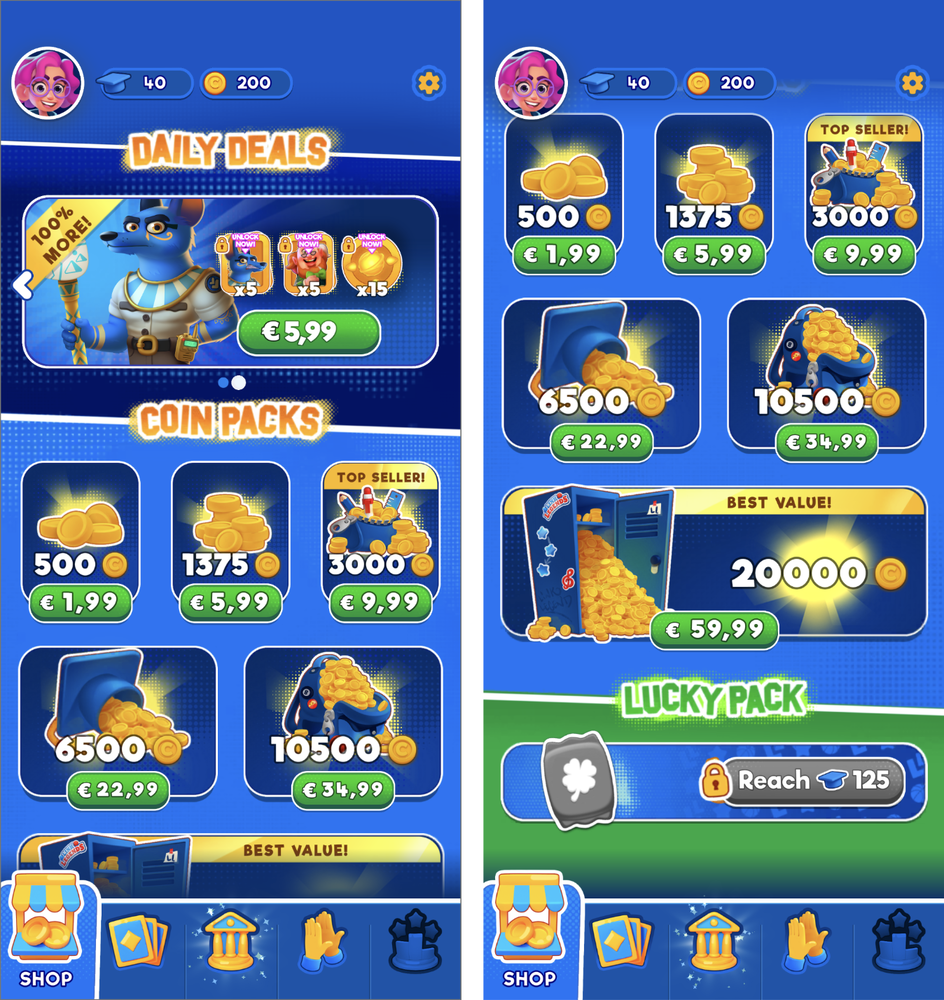
For a game with a limited assortment, this is a strong structural choice.
What works well:
-
High-conversion content first → Daily Deals are immediately visible
-
Utility in the middle → Coin packs sit in their expected position
-
Free reward at the end → encourages full scroll-through
💡 A note from Michael:
“A compact shop is often more effective than a large one. When every section has a clear role, players don’t get lost — they move through the funnel naturally.”
Another important signal: Daily Deals are visually dominant, indicating that bundles — not currency — are the primary conversion driver.
What’s Missing: First-Purchase Trigger
The shop lacks a dedicated Starter Pack.
Daily Deals partially fill this role, but they don’t create urgency. There is no clear “best first purchase” moment for new players.
In many games, a simple “One Time Only” starter offer acts as a strong early conversion trigger.
Coin Packs: Where Structure Breaks Down
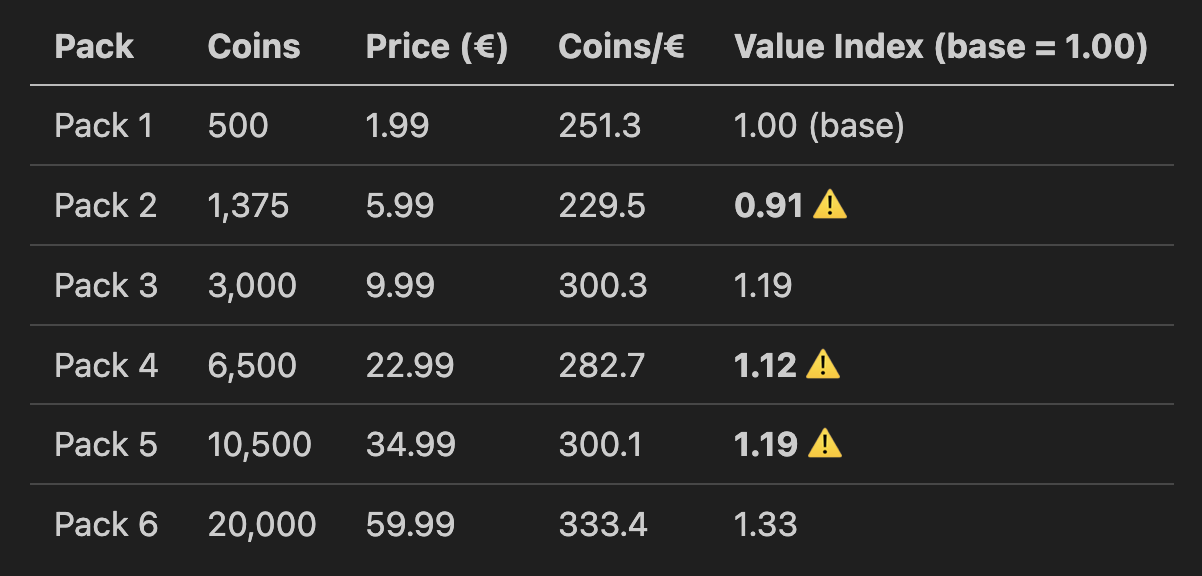
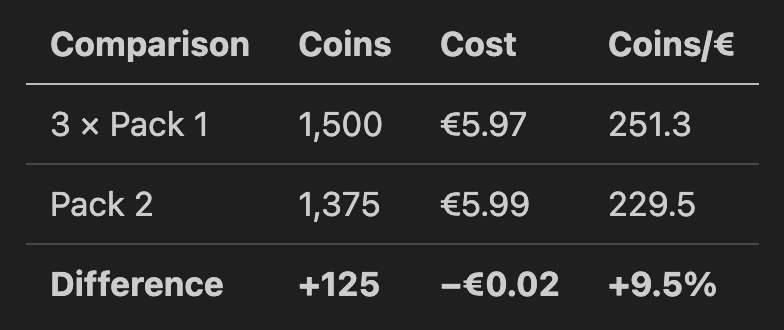
While the shop layout is clean, the currency pricing ladder has several inconsistencies.
Key Observations
-
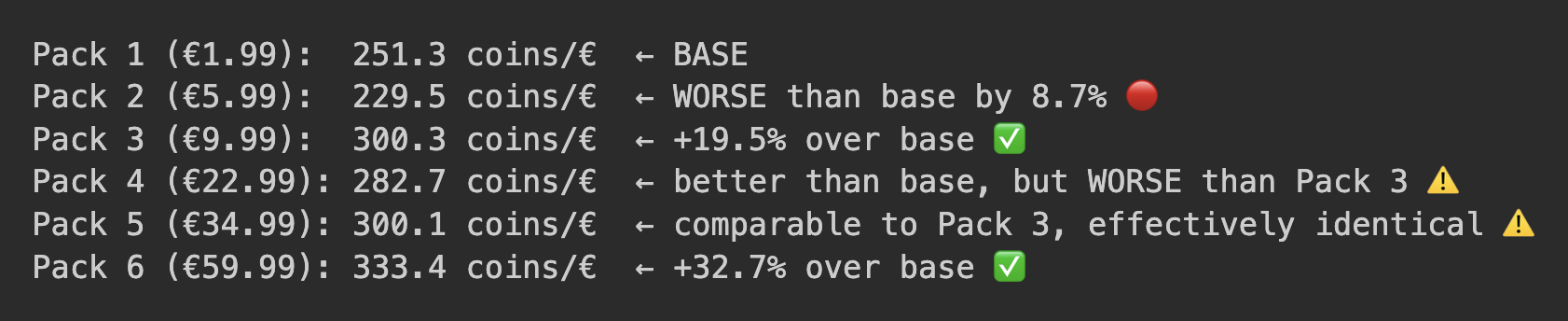
Some mid-tier packs offer worse value than cheaper alternatives
-
Higher-tier packs don’t consistently improve value per currency unit
-
Two packs deliver almost identical value despite large price differences
💡 A note from Michael:
“The value ladder is one of the most important systems in a shop. If players can find better deals by going backwards, trust breaks immediately.”
Why It Matters
A well-designed shop should follow a monotonically increasing value curve:
-
each step up feels more rewarding
-
higher spend = better efficiency
-
no “dead zones” between tiers
When this structure breaks:
-
players optimize around cheaper packs
-
higher tiers lose relevance
-
monetization becomes less predictable
Daily Deals: Strong Design Pattern
The Daily Deals carousel is one of the strongest parts of the shop.
Key strengths:
-
bundles contain varied content (characters, perks, resources)
-
offers are not simple “scaled versions” of each other
-
players choose based on needs, not just value
This aligns with a good LiveOps pattern: variety over linear scaling.
💡 A note from Michael:
“A good carousel doesn’t force a ‘best deal’ — it offers different solutions to different player needs.”
About the “100% MORE!” Messaging
The value claim is not directly verifiable (no reference price shown), but it remains within a reasonable range, avoiding overly aggressive multipliers that can feel misleading.

Lucky Pack: A Well-Designed Retention Loop
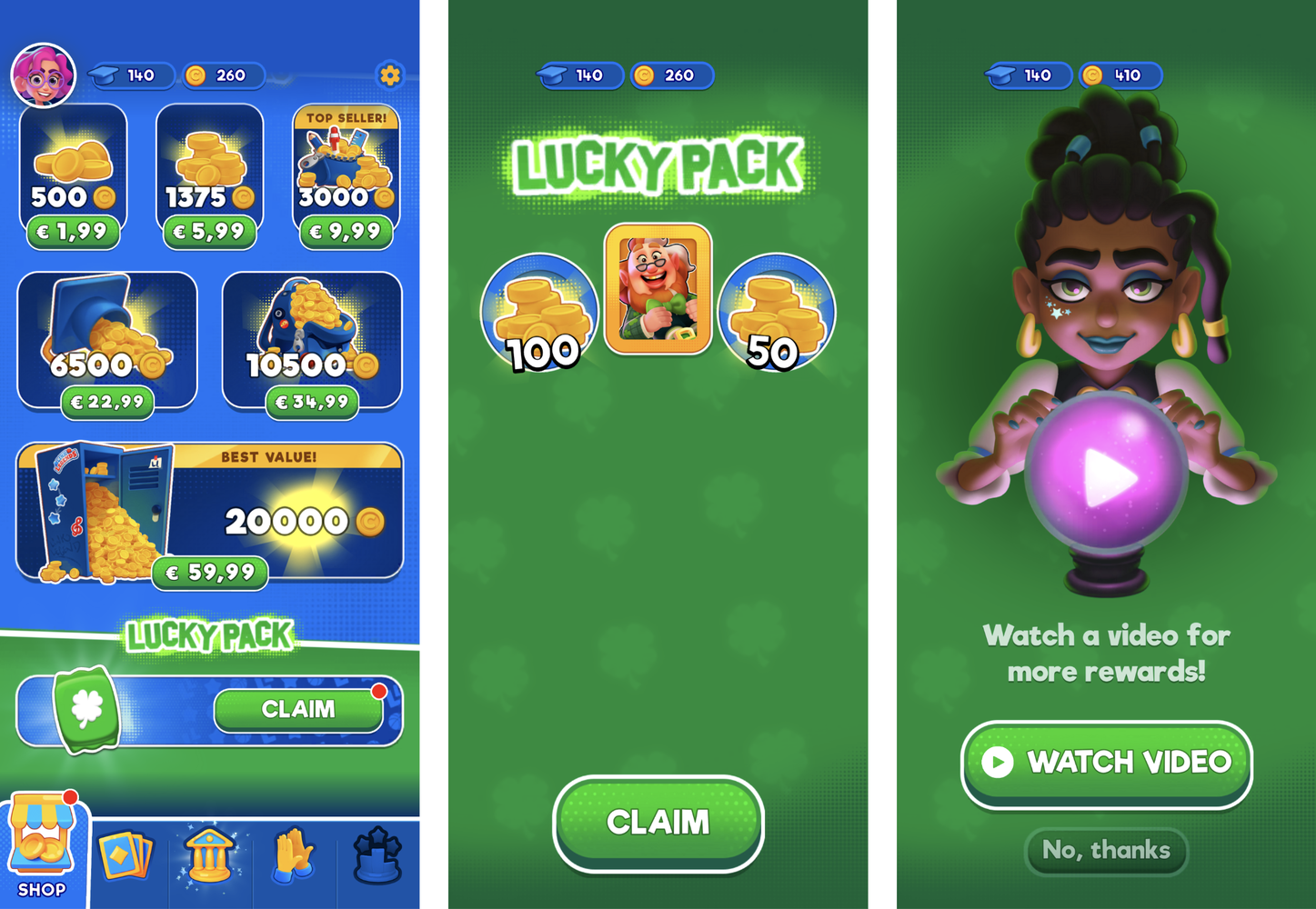
The Lucky Pack is a standout feature in the shop.
It’s a free loot box with:
-
randomized rewards (boosters, perks, coins, abilities)
-
a ~3-hour cooldown
-
optional rewarded ad for bonus rewards

What Works Well
-
Randomization adds excitement → each claim feels different
-
Short cooldown (~3 hours) → drives multiple daily visits
-
Ad is optional and post-reward → never blocks progression
-
Notification dot signals availability → strong pull mechanic
-
Bottom placement → players scroll past paid content first
💡 A note from Michael:
“This is a great example of a ‘free visit → monetization exposure’ loop. The player comes for the reward, but sees the offers every time.”
Opportunity
-
the feature unlocks relatively late (125 XP), delaying habit formation
-
reward probabilities are not visible, which may affect transparency
UX and Visual Design
The shop UI follows a clear and scalable structure:
-
single scrollable feed (no tabs needed)
-
clear section headers
-
strong visual hierarchy for packs (small → medium → large cards)
This creates a natural progression:
-
smaller packs = less visual weight
-
larger packs = more prominence
Social Proof and Guidance
-
“Top Seller” and “Best Value” badges are correctly placed
-
however, mid-tier packs lack visible progression indicators

Adding simple labels like:
-
+10%
-
+20%
-
+40%
would make value differences easier to understand at a glance.
Final Thoughts
Link Legends gets the shop structure right.
It’s compact, easy to navigate, and every section has a clear role:
-
Daily Deals drive conversion
-
Coin Packs provide utility
-
Lucky Pack creates repeat visits
The Lucky Pack system, in particular, is a strong example of how free rewards can support both retention and monetization exposure.
However, the currency pricing structure weakens the overall system.
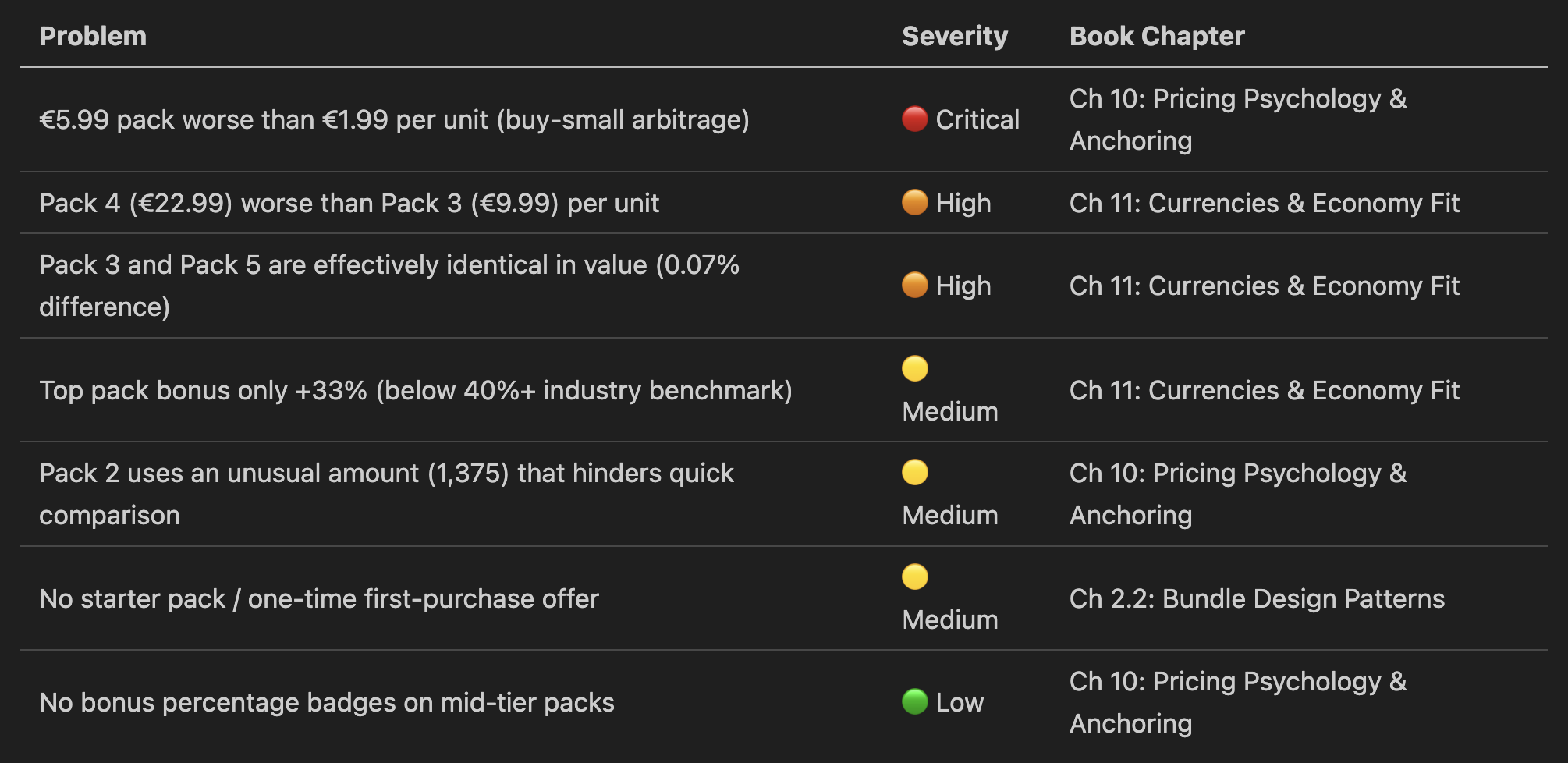
Several packs:
-
break the value progression
-
create overlap between tiers
-
reduce the incentive to move up the ladder
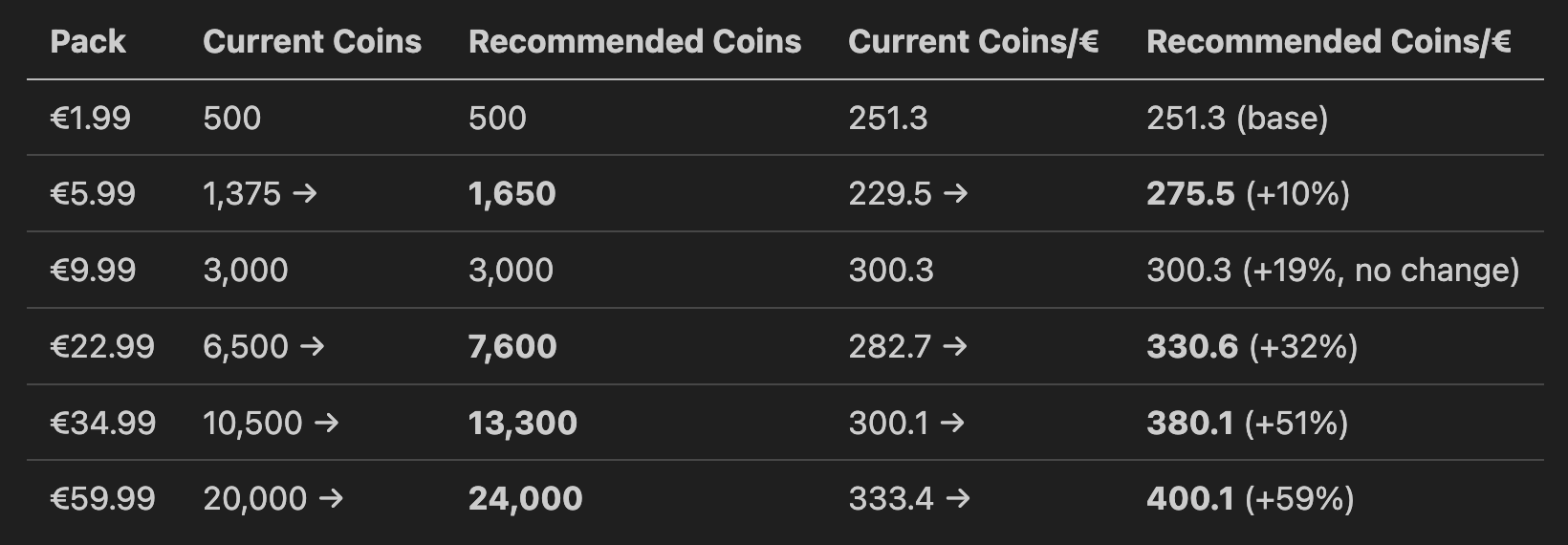
These are not structural issues — they are calibration problems, and they can be fixed relatively quickly.
LiveOps Takeaway
A well-designed shop is not just about structure — it’s about consistency and iteration.
Even small inconsistencies in pricing or value signals can:
-
redirect player behavior
-
reduce trust
-
impact conversion across the entire system
💡 A note from Michael:
“In LiveOps, the difference between a good shop and a great one is often a few percentage points in the value ladder.”
Platforms like Balancy help teams continuously refine these systems by enabling:
-
fast iteration on pricing and bundles
-
testing different shop structures and layouts
-
running A/B tests on offers and value perception
-
adjusting LiveOps content without engineering delays
For live games, the ability to test, learn, and adjust quickly is what turns a stable monetization system into a scalable one.