We asked Michael Khripin, Product Owner at Balancy, to take a close look at Coffee Pack — and unpack how Voodoo approaches hybrid monetization, progression, and LiveOps systems in a puzzle-driven casual title.
This article is based on a Balancy webinar deconstruction, where Michael analyzed the game hands-on and interpreted its design choices as product hypotheses, not confirmed input from the studio.
Coffee Pack in the Hybrid-Casual Landscape
Hybrid-casual has become one of the fastest-growing segments in mobile gaming.
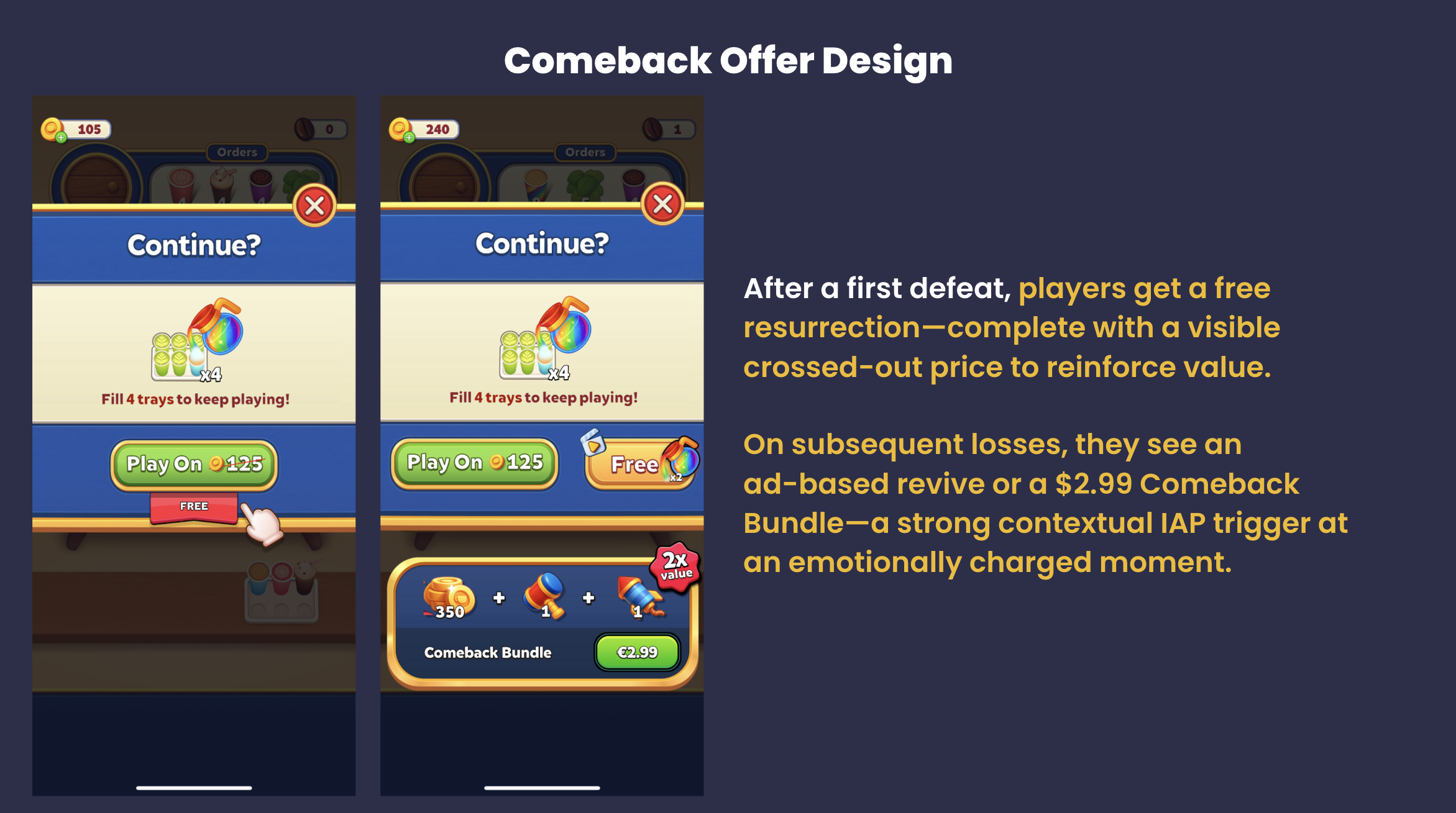
According to AppMagic, hybrid-casual revenue grew over 114% year-over-year, with puzzle and simulation titles accounting for more than 60% of that growth. What’s driving this shift isn’t just reach — it’s depth.
Players still expect fast, accessible gameplay. But increasingly, they also expect:
-
Meta progression
-
Structured LiveOps events
-
Long-term goals beyond session-to-session play
Coffee Pack is an interesting case because it blends a clean, familiar puzzle loop with systems clearly inspired by top-grossing titles like Royal Match — while deliberately tuning them differently.
Daily Missions: Parallel Progress, Sequential Friction
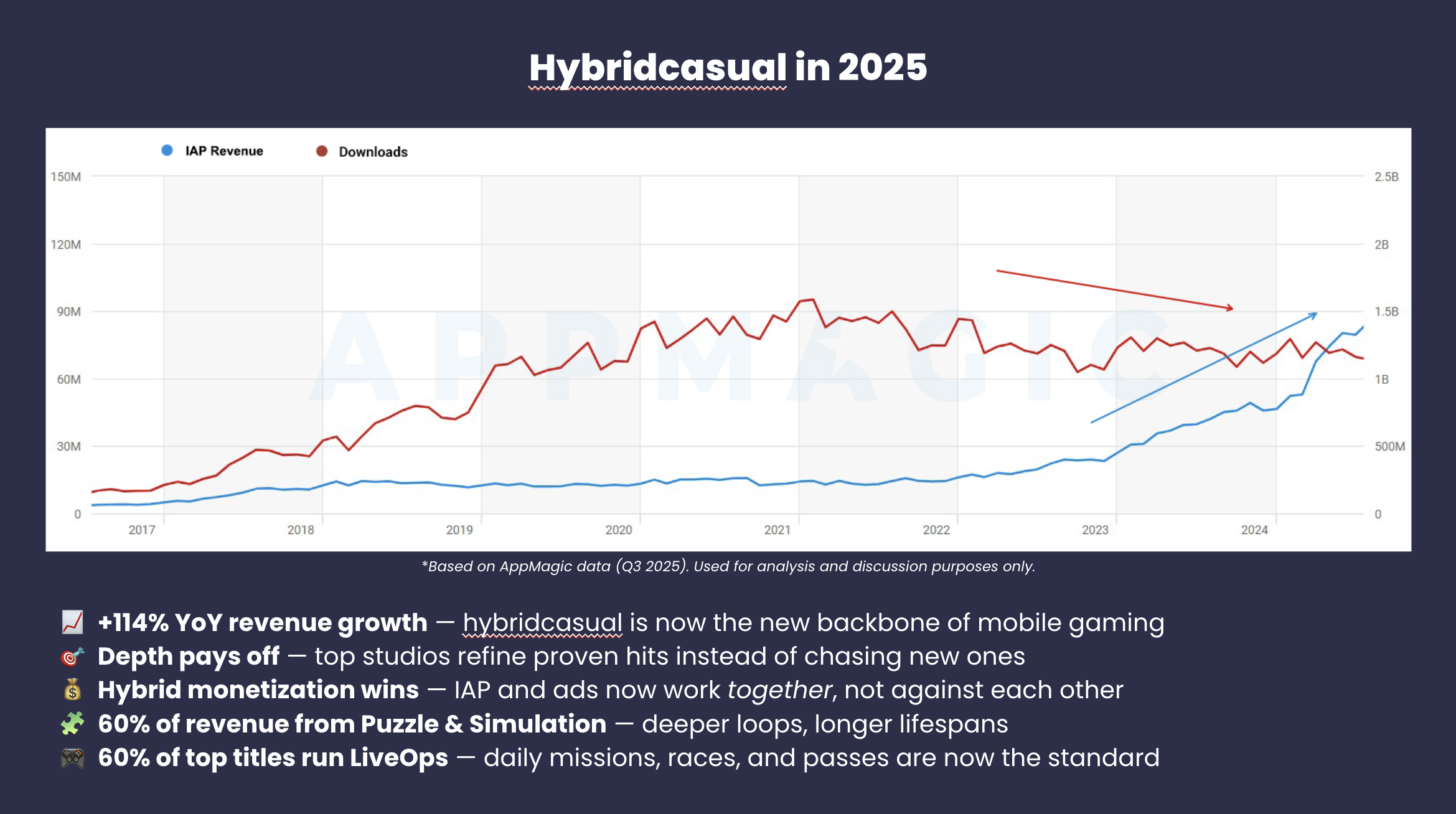
From the first sessions, Coffee Pack introduces five daily missions, all progressing in parallel. These missions also feed into a weekly progression track with milestone rewards.
On paper, the structure is familiar. The execution is not.
Despite missions progressing simultaneously, rewards must be claimed in a strict top-to-bottom order. If one mission is incomplete, completed missions above it remain locked.
In practice, this creates friction:
-
Players often finish multiple missions but can’t claim rewards
-
The system encourages waiting until all five are done before opening the menu
-
In some cases, rewards don’t unlock until the menu is reopened
💡 Michael’s take:
This level of cross-dependency feels unusually strict. It may be part of an ongoing A/B test, but from a player perspective, it risks creating daily frustration rather than motivation.
Revives, Ads, and Contextual Comeback Offers
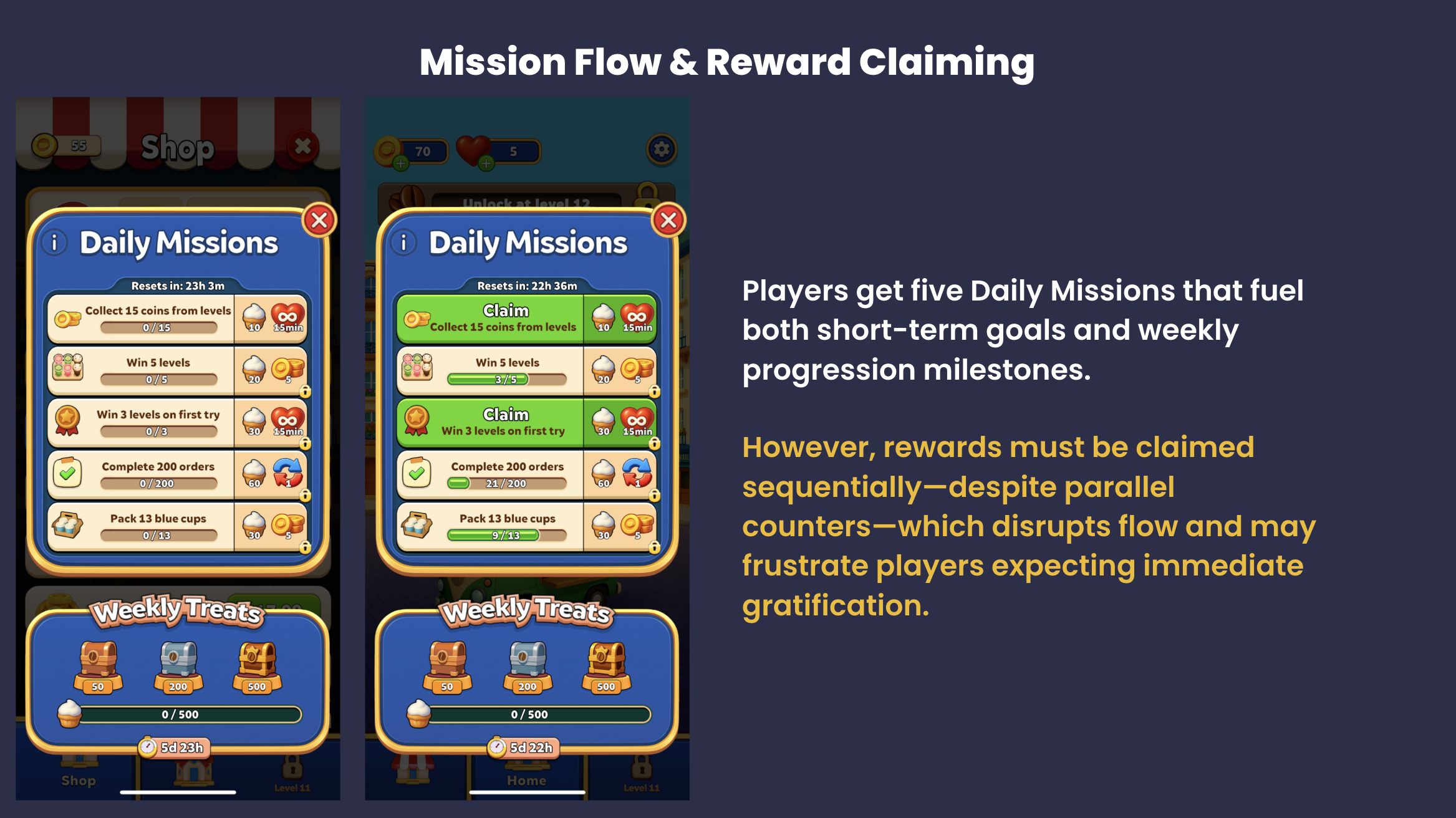
On a player’s first loss, Coffee Pack grants a free revive — a powerful one. It clears four trays at once and shows a crossed-out coin price, clearly signaling value.
On subsequent losses, the options scale:
-
Full-price revive (coins)
-
Ad-based revive (weaker effect)
-
A one-time contextual comeback bundle ($2.99), framed as “2× value”
The key detail:
That bundle only appears in the loss moment. Miss it, and it’s gone until the next failure.
💡 Michael’s take:
This is classic high-performing contextual monetization. The offer is framed as rare, generous, and situational — and Voodoo likely has strong historical data showing this converts well.
A Late-Game Booster That Isn’t Monetized
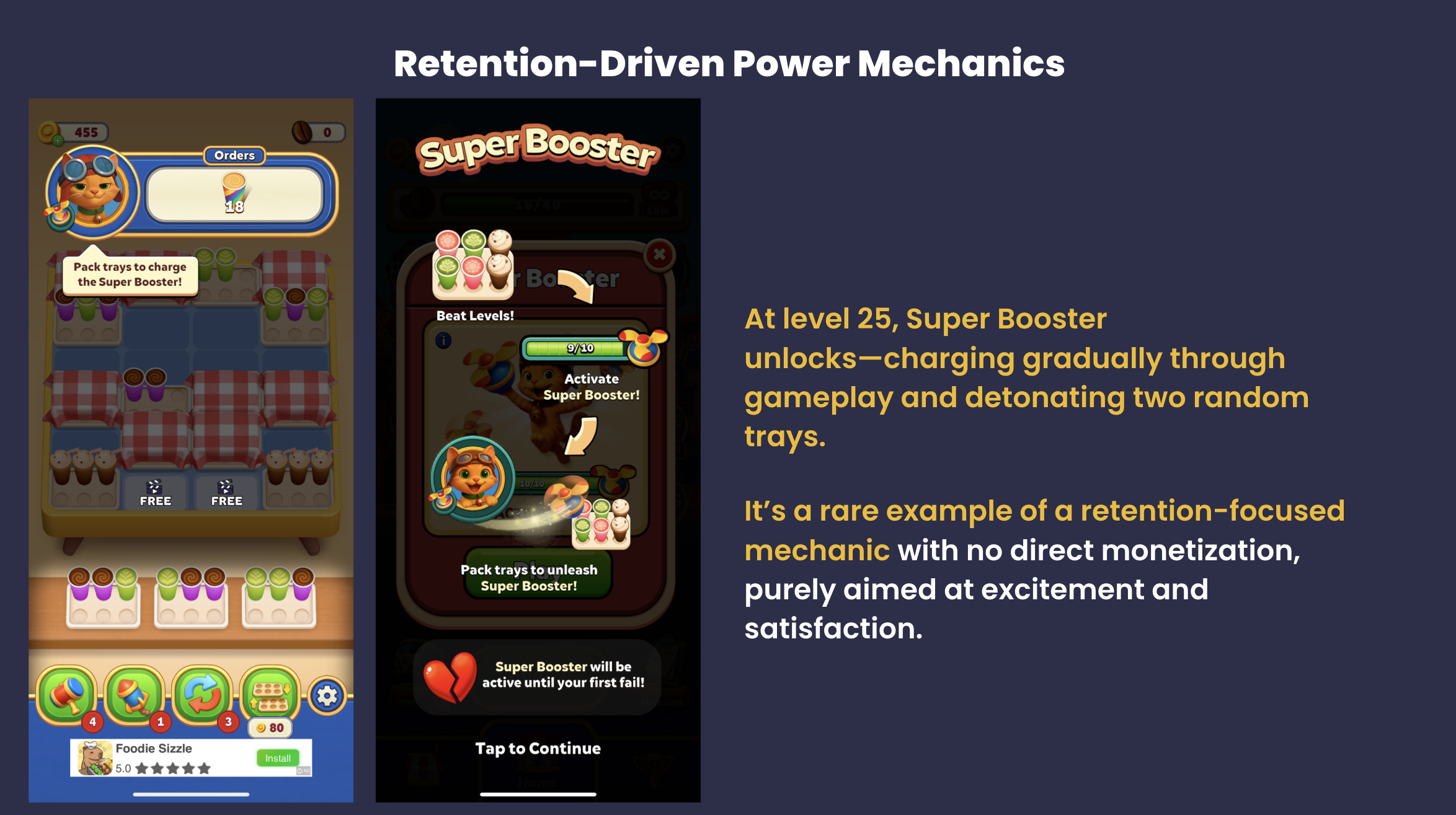
At level 25, Coffee Pack unlocks a Super Booster. It charges over time and detonates mid-level, destroying random trays.
Notably:
-
There’s no direct monetization tied to it
-
It’s locked behind progression
-
It rewards win streaks rather than purchases
💡 Michael’s take:
This mirrors mechanics seen in top puzzle games (like win-streak bonuses in Royal Match), but with a creative twist. The goal is the same — protect momentum — but the implementation feels distinct.
It’s not monetized directly, but it likely supports monetization indirectly by encouraging players to avoid losses and preserve streaks.
The Barista Pass: Familiar Structure, Different Math
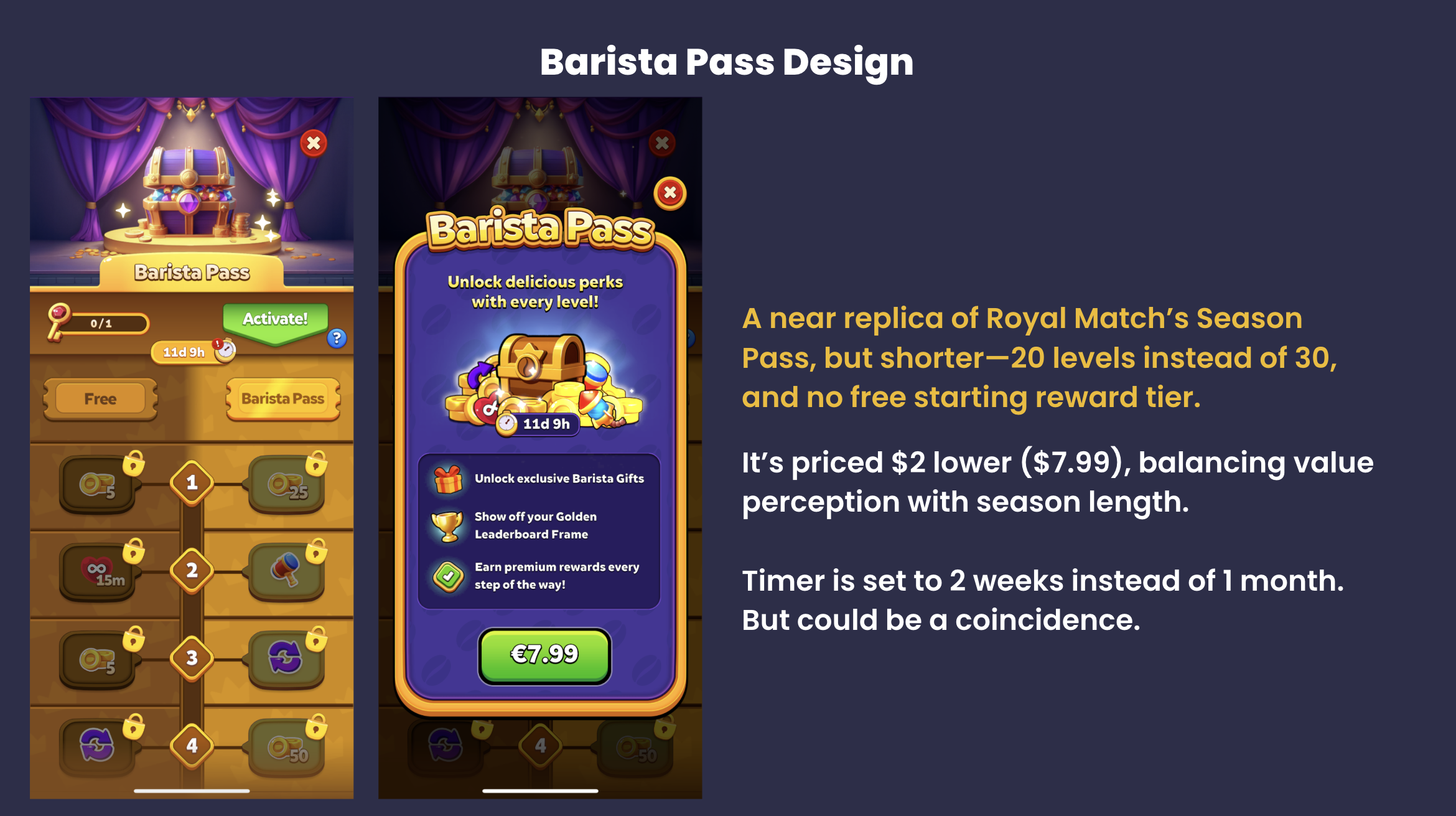
Coffee Pack’s Barista Pass borrows heavily from Royal Match — but doesn’t copy it outright.
Key differences:
-
20 levels instead of 30
-
No “level zero” free reward
-
Lower price point ($7.99)
-
Shorter duration (two weeks)
Over a month, players are offered two passes instead of one.
💡 Michael’s take:
This is a deliberate rebalance. Players get more progression touchpoints and more total levels, but are nudged toward spending more over time. It’s a different trade-off — not necessarily cheaper, but structured to feel lighter and more frequent.
Borrowed Events, Re-Tuned Economies
Many LiveOps events in Coffee Pack resemble known formats:
-
Balloon-style retry events
-
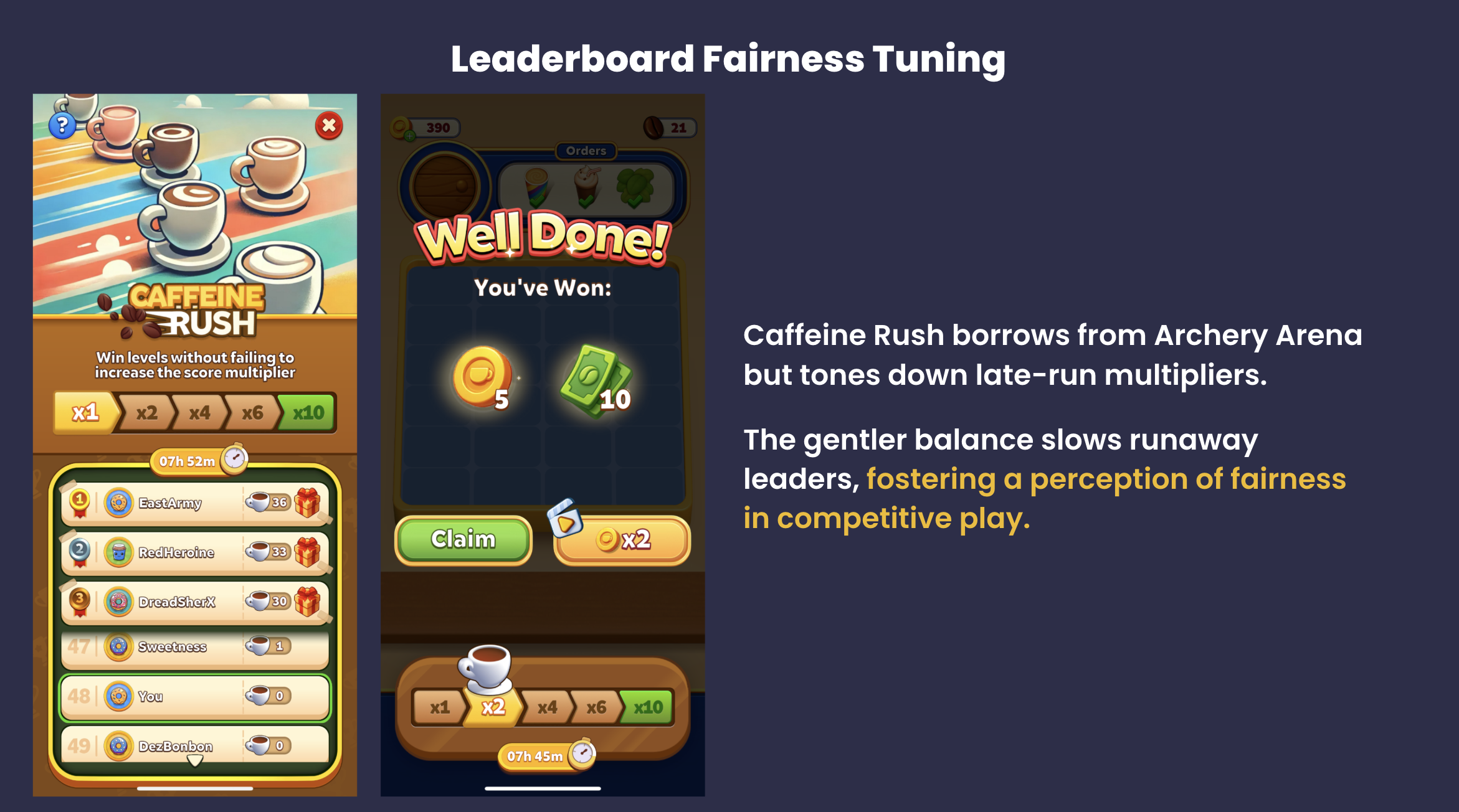
Leaderboard races
-
Streak-based challenges
-
Progressive chain offers
But almost all are tuned more tightly:
-
Fewer retries
-
Lower multipliers
-
Harsher failure conditions
-
Less frequent reward moments
💡 Michael’s take:
This suggests confidence in the audience. The team appears comfortable applying more pressure — likely based on testing — while still maintaining engagement.
The game repeatedly borrows proven structures, then adjusts risk, reward, and pacing rather than copying blindly.
Shops, Offers, and What’s Missing
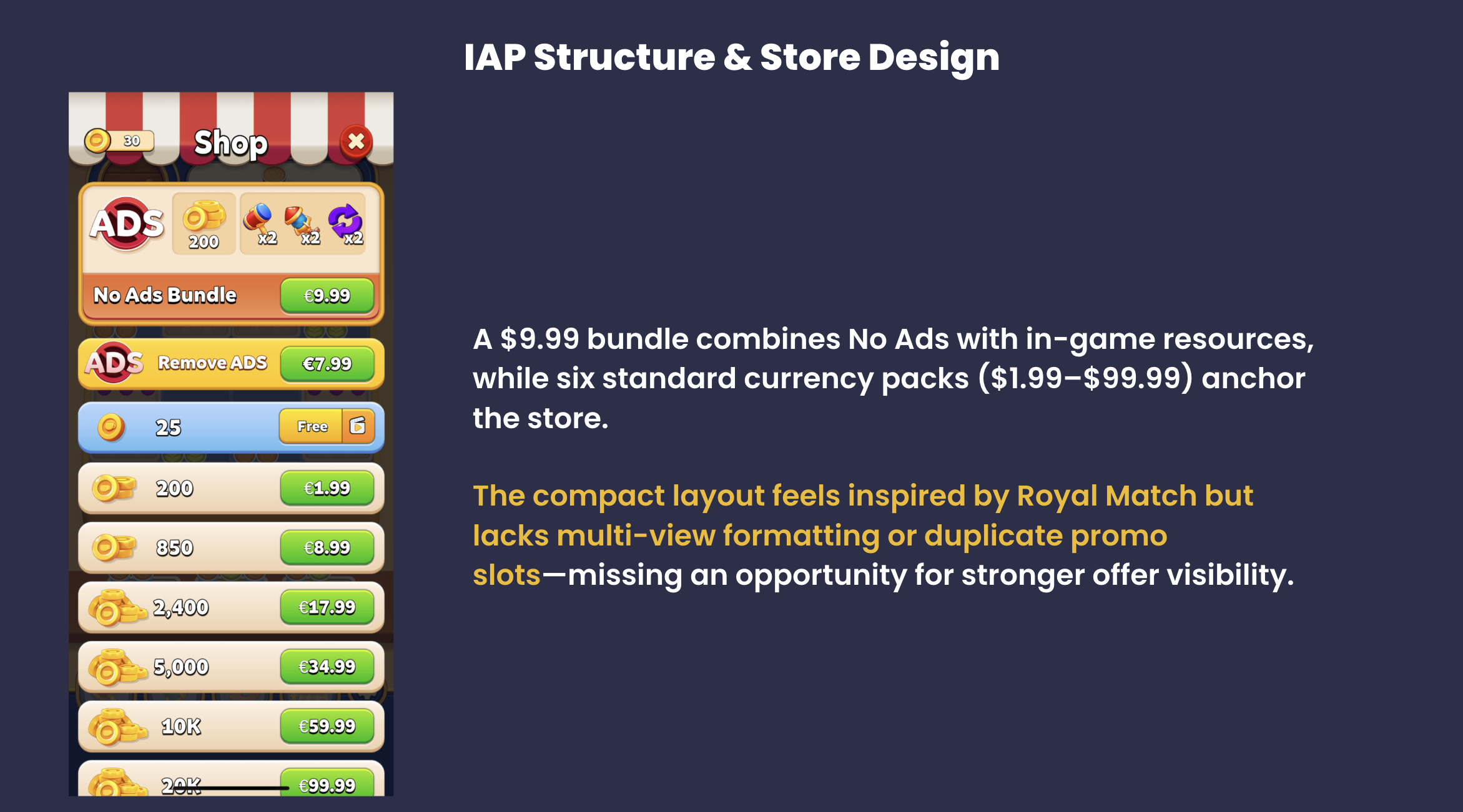
The shop layout is dense and functional — clearly inspired by Royal Match — but noticeably restrained.
What stands out:
-
Limited duplication of active offers
-
No aggressive in-shop promotion of passes or events
-
Paid-first chain deals where competitors often start free
💡 Michael’s take:
Some of this may be intentional tuning. Some may simply reflect a shop still evolving. Compared to reference shops, visibility is an area with clear upside if expanded.
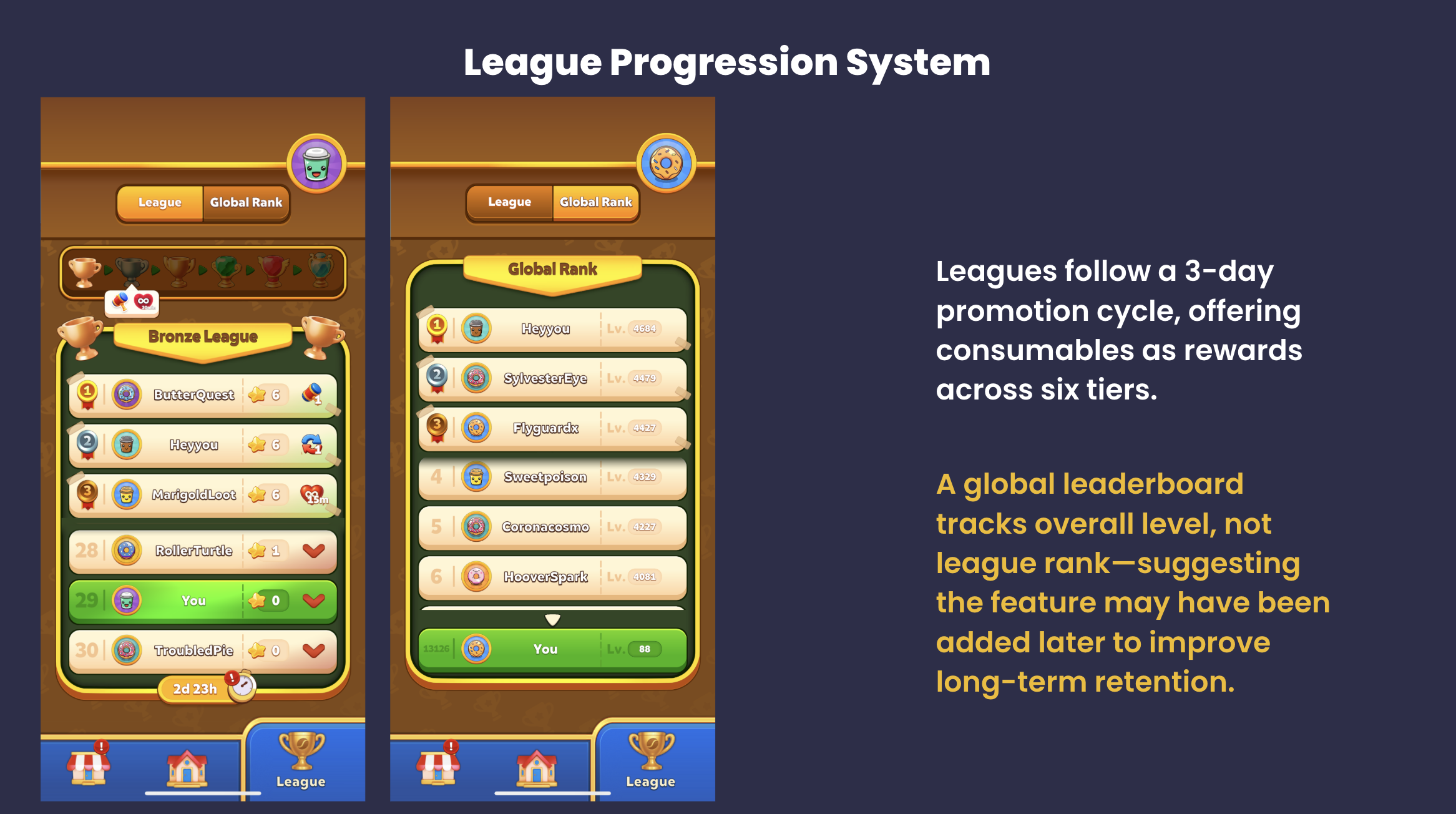
Leagues and Long-Term Retention
Coffee Pack includes:
-
A multi-tier league system with 3-day cycles
-
Promotion/demotion rewards
-
A global leaderboard separate from leagues
While leagues likely support mid-term retention, the global leaderboard feels disconnected — more informational than motivational.
💡 Michael’s take:
Leagues do the real work here. The global ranking may be legacy UI or exploratory, but it doesn’t appear central to engagement.
Final Thoughts
Coffee Pack is a strong example of selective borrowing.
Rather than inventing entirely new systems, Voodoo:
-
Adopts proven LiveOps structures
-
Rebalances them for a different audience
-
Applies tighter pressure where confidence allows
-
Experiments without fully mirroring market leaders
This deconstruction isn’t about copying Royal Match — it’s about understanding how small tuning decisions compound across progression, monetization, and LiveOps.
💡 Michael’s reflection:
“When teams reuse proven structures but change the pressure points, they’re not copying — they’re optimizing. That’s where differentiation actually happens.”
Want the full picture?
This article highlights several of Coffee Pack’s LiveOps systems, but the full deconstruction goes deeper — including additional events, tuning details, and live Q&A.
🎙️ Watch the complete analysis in Balancy Webinar #12:
Coffee Pack Deconstructed — Inside Voodoo’s LiveOps Design