Introducing the Prefab System — reusable UI building blocks for faster LiveOps development
February introduced one of the most important workflow upgrades to Balancy’s UI ecosystem: the Prefab & Component System.
Inspired by the design patterns many teams already know from game engines like Unity, Prefabs bring reusable interface components to Balancy’s web UI environment. Instead of rebuilding elements again and again, teams can now compose complex LiveOps screens from modular pieces.
Alongside this major addition, February also delivered improvements to the Assets system and continued development of the new SDK.
Let’s take a closer look.
Prefabs System — Build Interfaces with Reusable Components
The Prefab & Component System introduces a modular approach to UI creation inside Balancy.
With Prefabs, teams can create reusable UI elements that combine layout, assets, and script logic into a single template. These templates can then be reused across multiple Views, making UI development faster and easier to maintain.
This approach allows teams to:
-
Create reusable UI templates for common elements
-
Attach script behavior directly to UI components
-
Assemble complex screens from simple building blocks
-
Maintain consistency across different events, shops, and offers
For LiveOps teams working with frequent UI changes — such as seasonal events, offers, or store variations — this significantly reduces repetition and speeds up iteration.
New Public Package: Balancy UI Prefabs
To demonstrate how the system works in practice, a new public package — Balancy UI Prefabs — is now available in the package catalog.
This package includes several ready-to-use components built with Prefabs:
• Buy Button prefab
• Item With Amount prefab
• Game Shop resource slots
• Offer slot for Game Shop
• Simple Offer View built with prefabs
• Group Offer View composed from prefab components
• Game Shop View assembled entirely from prefabs
Each prefab uses built-in scripts to control its behavior, showing how logic and interface elements can work together as modular components.
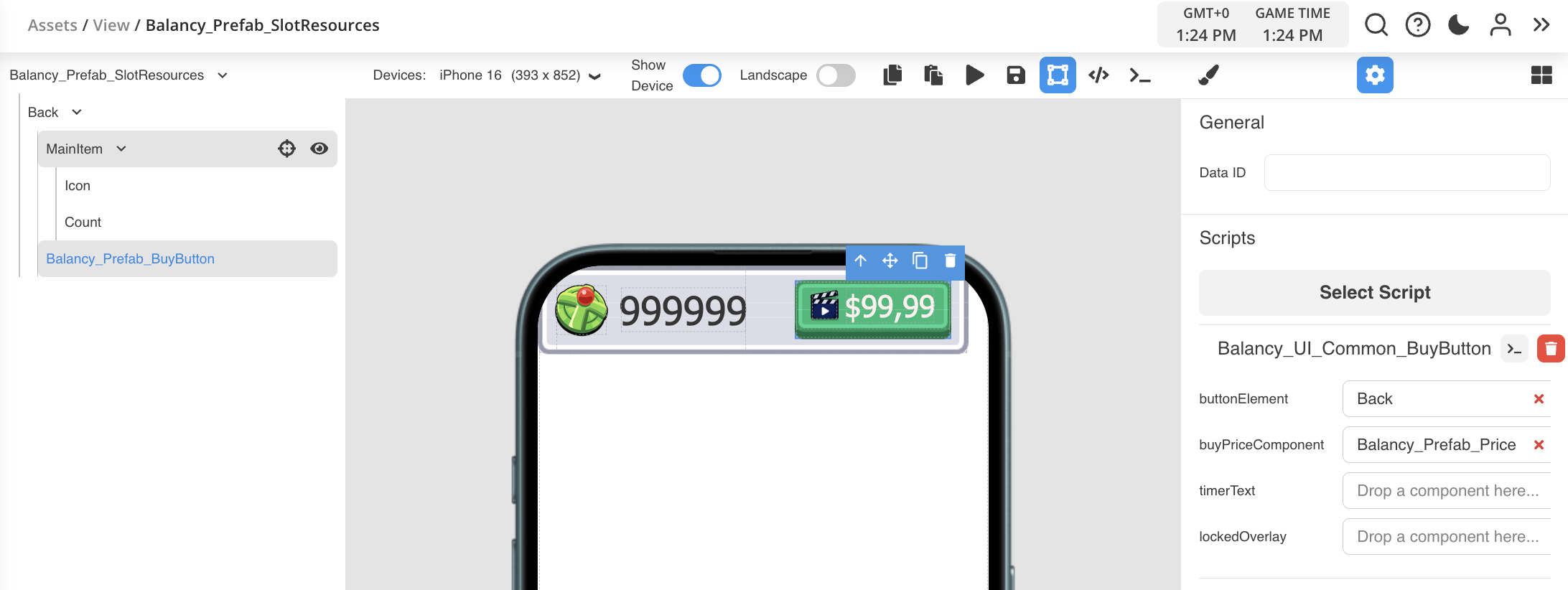
These examples act as both learning resources and production-ready building blocks for teams designing LiveOps interfaces.
Assets Page Rework
February also brought a significant usability improvement to the Assets page, simplifying how files are organized and managed.
Previously separated asset categories — Images, Fonts, Audio, and Other — are now consolidated into a single Files tab.
The new system includes:
-
Sub-type filtering to quickly display specific asset types
-
Automatic file type detection during upload
-
Original file name tracking, so teams always know the source asset
The source file name is now visible via tooltip in the Kind column, making asset tracking much easier when working with large libraries.
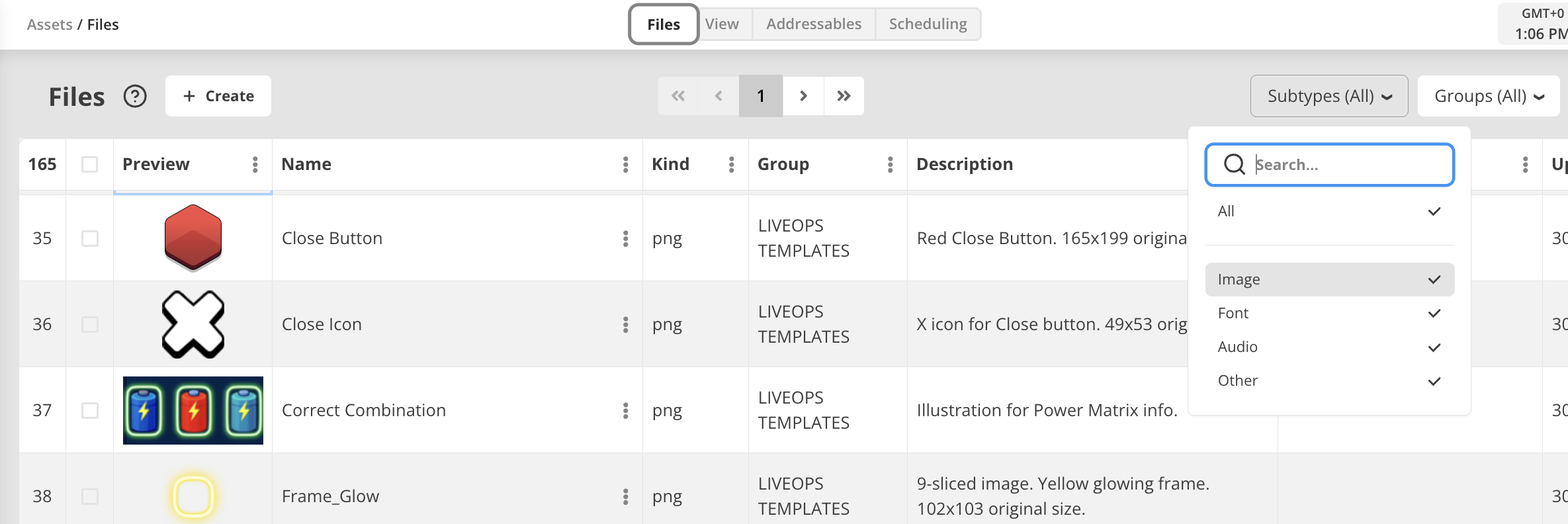
Updating an asset will also update the stored source file name, keeping asset history accurate.
New SDK Updates
Work on the new Balancy SDK continued throughout February, focusing on compatibility, stability, and feature completeness.
The SDK now includes:
• Logic and ConditionalTemplate support
• Improved Singleton handling
• SmartList support for simple types
• DailyBonus fixes
• Updated Webview SDK with Prefab support
Earlier updates to the SDK also introduced several systems previously available only in the older plugin, ensuring backward compatibility for teams migrating their projects.
These additions include:
-
Addressables support
-
Assets scheduling
-
Custom conditions support
-
Performance improvements for older devices
-
Complete node support for Visual Scripting
-
Improved ad-watch logic
Together, these improvements help teams transition smoothly while maintaining performance across devices.
Why It Matters
February’s update marks a shift toward modular UI architecture inside Balancy.
With Prefabs, teams can now:
-
Build UI elements once and reuse them across events and offers
-
Maintain consistency across multiple screens and game features
-
Iterate faster on LiveOps interfaces without rebuilding layouts
Combined with the updated Assets workflow and continued SDK improvements, these changes make Balancy a more scalable environment for teams managing complex LiveOps pipelines.
Wrapping Up
The introduction of Prefabs brings Balancy’s UI development approach closer to the workflows many game teams already rely on inside their engines.
Reusable components, script-driven behavior, and modular layouts open the door to faster iteration and more maintainable LiveOps interfaces.
And this is only the beginning — Prefabs will continue evolving as teams explore new ways to design stores, events, and offers using modular UI building blocks.